Themes
Space Coloring Pages: Planets and Astronauts for Preschool
A colouring page is a good place for big questions. How to use astronaut and space pages with a curious preschooler, and how to answer what they ask.
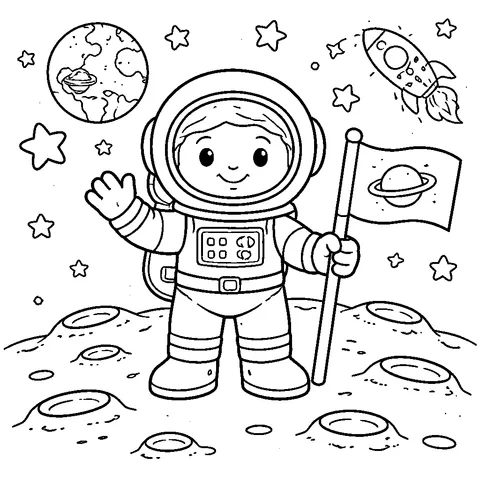
It is a warm evening and you are on the sofa with the last of the daylight still in the window. Your child has the astronaut on the moon page and is asking, with total seriousness, where the astronaut is going to sleep. You say you are not sure either, and that the moon has no beds, and the question becomes: what would you take if you were going? Forty minutes later there is a coloured page, a drawing of a sleeping bag taped to the wall, and a list of things a person would need to bring along.
Space is one of the first subjects children ask about on their own, and colouring pages are a good way to meet that curiosity without turning it into a quiz. The pages in this set are detailed enough to hold an older child's attention and simple enough for a younger one to colour in. The notes below cover how to use them, what to say when the questions start, and how to keep the activity from turning into a right-or-wrong conversation.
The activity in short
The activity is a story with a colouring page underneath it. You look at the scene together, say what you can see, and let your child's questions take the conversation wherever they go. The picture gives the questions something to point at, which is the main thing a picture does better than a description.
NASA's Skywatching FAQ, listed among the sources below, answers the questions children ask most often about the moon and the planets, and NASA Space Place has activities and pictures made for children. Both are useful when you want a real answer to hand back to a curious four-year-old.
Step by step
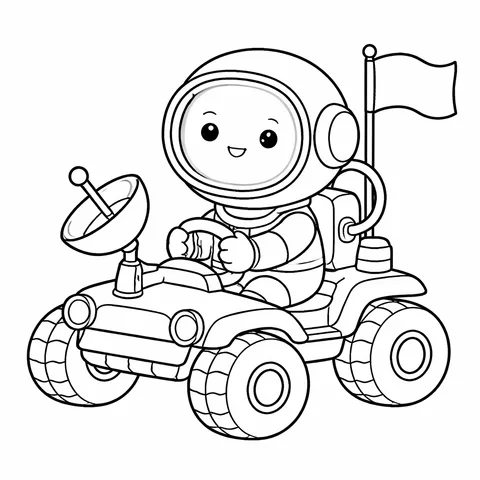
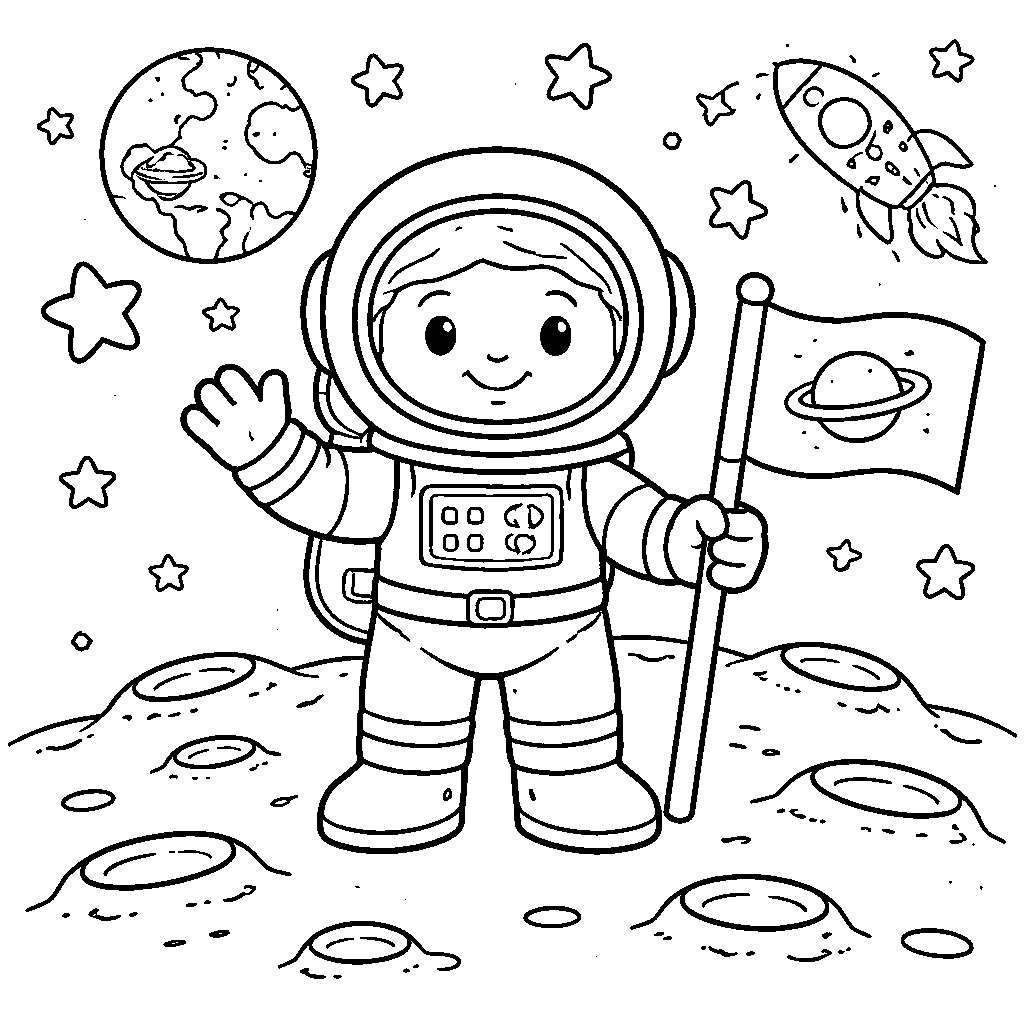
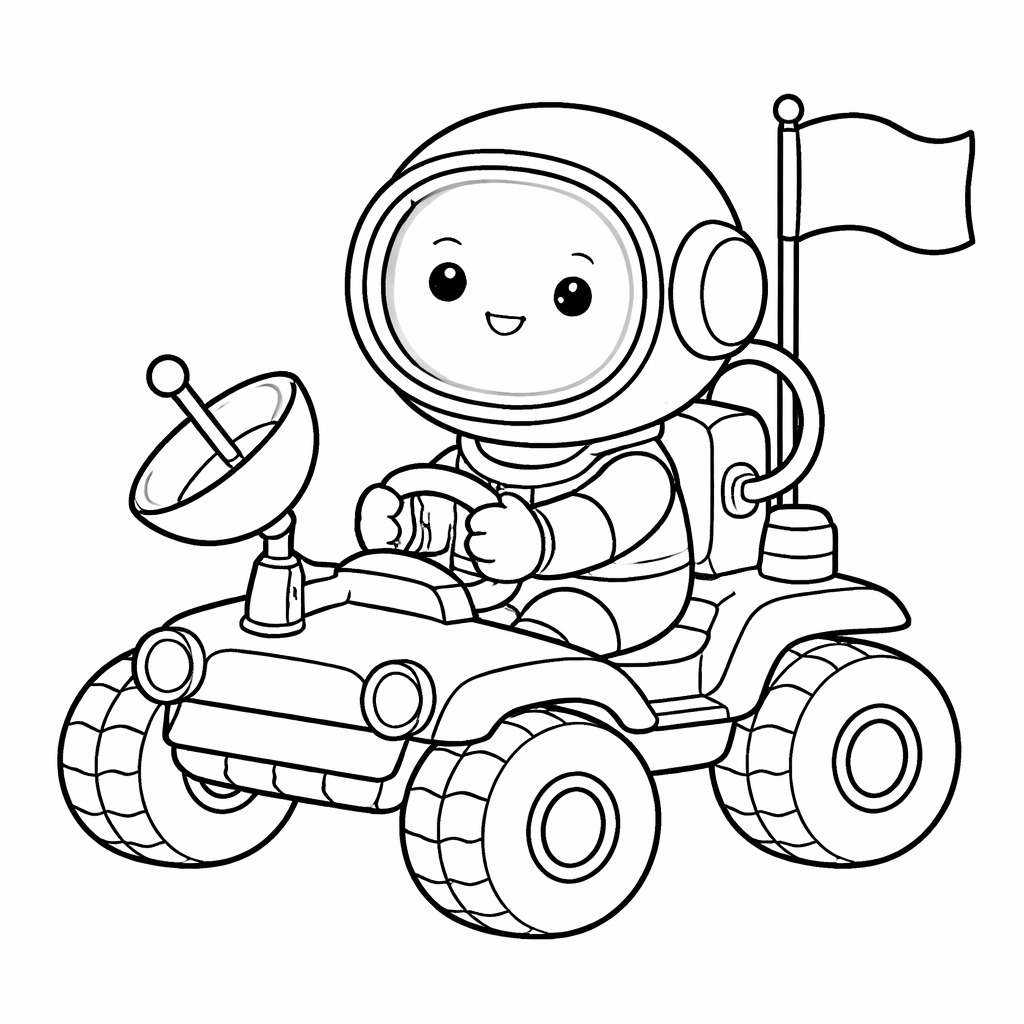
1. Read the scene as a story. Describe what the astronaut is doing. "The astronaut is standing on the moon next to a rover, and the rover has wheels." Descriptions give your child a way into the picture without demanding a response.
2. Name what is visible. The astronaut, the helmet, the rover, the flag, the plant, the stars. Point and name, then let your child point and name back. On the pages with a lot of small detail, such as the spacewalk tool, this alone can fill several minutes.
3. Answer one big question. Children usually have one question at a time. The moon has no air for the astronaut to breathe, so the suit carries its own supply. The moon has no wind and no rain, so a footprint stays where it is pressed. The planets travel around the sun, which is why they appear in different places on different nights.
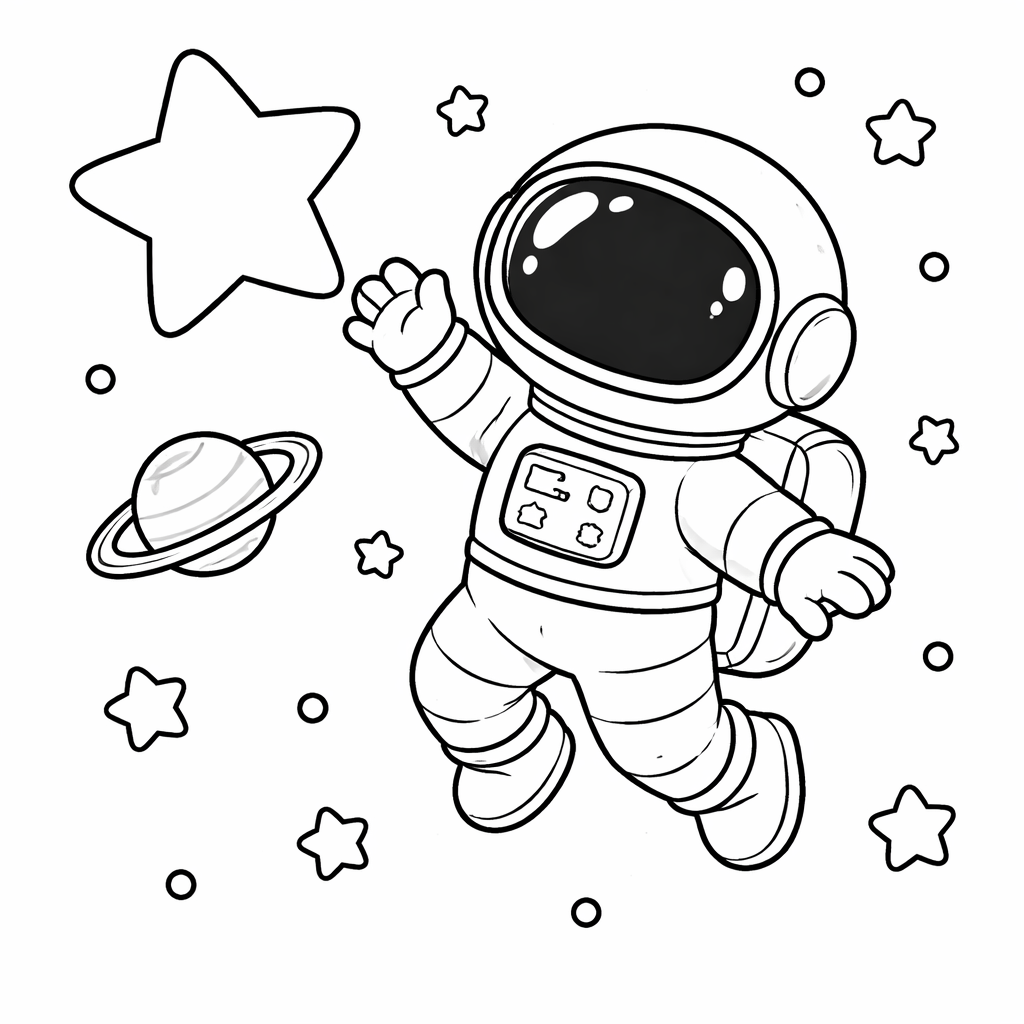
4. Put the pages in a journey order. Lay the pages on the floor and arrange them as a trip: the rocket, the floating astronaut, the moon landing, the plant growing. Making a sequence out of separate pictures is a quiet, absorbing task for a child who likes a project.
5. Add what is missing. Ask your child to draw whatever is not on the page. The sky from the moon's surface, the Earth as a small blue circle above the astronaut, a garden in the plant page, a favourite meal on the rover.
6. Colour last, or colour first. Some children want to draw and talk for ten minutes before touching a crayon. Others want to colour first and talk while they work. Either order works, and following the child's lead here saves the whole session.
What this practises
The activity combines looking closely with talking about place. A child works out where the astronaut is, what the ground is made of, and what is different about this landscape than the one outside the window, and they do it with a picture in their hands rather than from memory.
Naming things also builds a vocabulary that is useful in books later. Once a child has met a rover, a helmet and a spacewalk, those words are no longer strange when they turn up in a story.
Asking and answering is the part NAEYC's guidance on stretching a child's thinking emphasises. A question such as "what would you take with you" is open enough that several answers work, and the thinking happens while your child is talking rather than while they are being tested.
Choosing a page for your child
The pages with a single astronaut on the moon, on the rover and waving with the moon behind them are the easiest starting points. There is one figure, a clear background and little else to untangle, and most of them are marked for the four to seven age range.
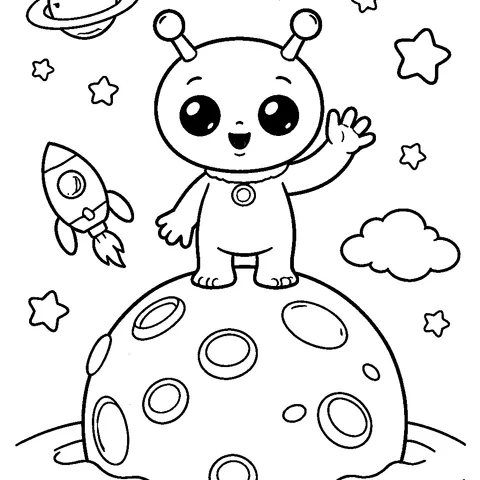
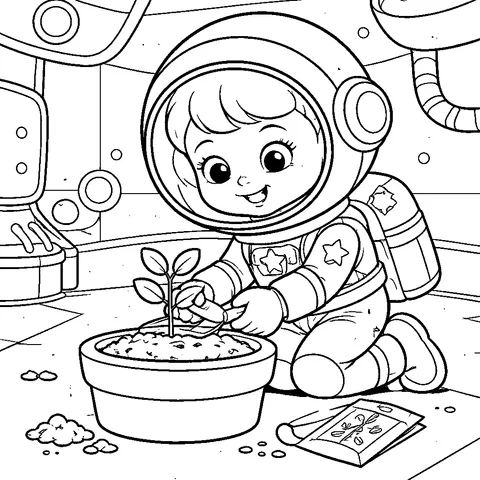
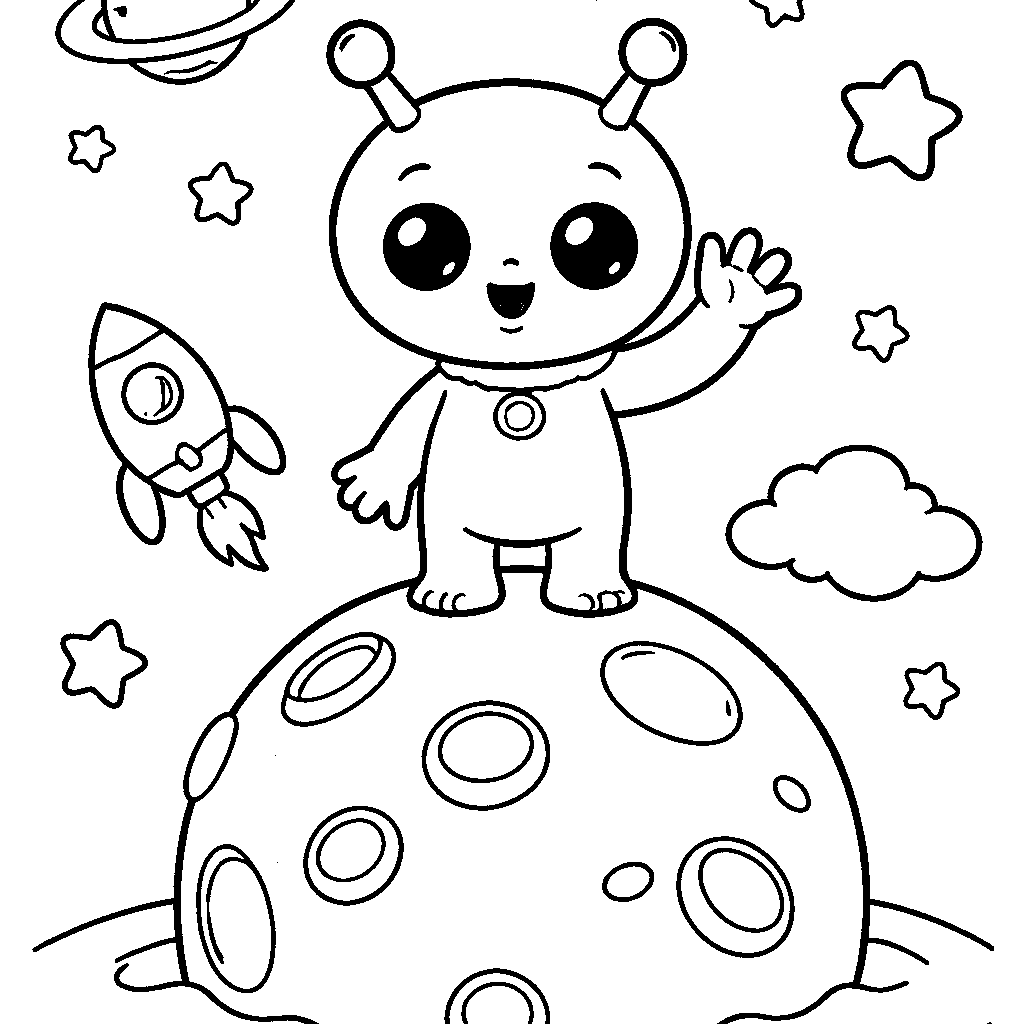
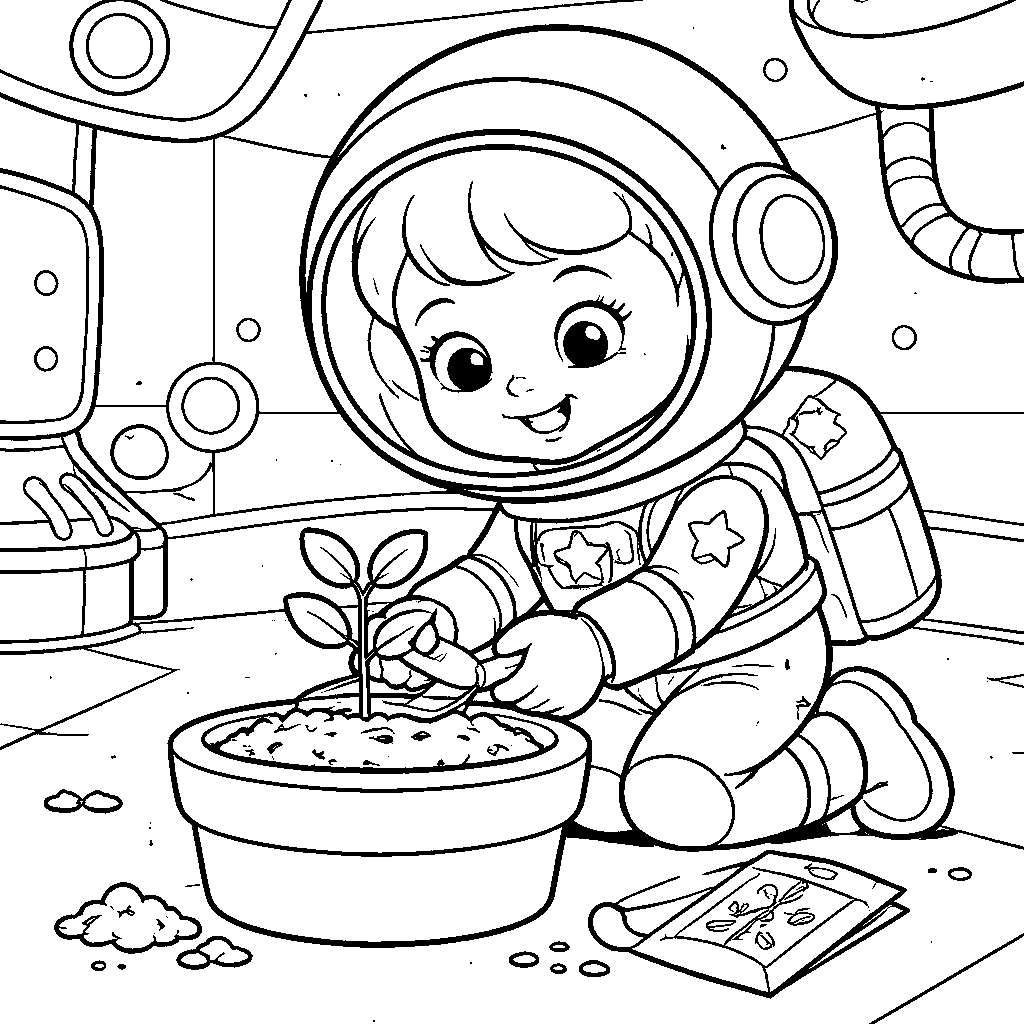
The alien waving page invites invented answers rather than real ones, which is often easier for a child to enter than a picture that is trying to be accurate. The astronaut growing a plant page pairs space with something a child knows well, so it is a good page for a conversation about plants and water.
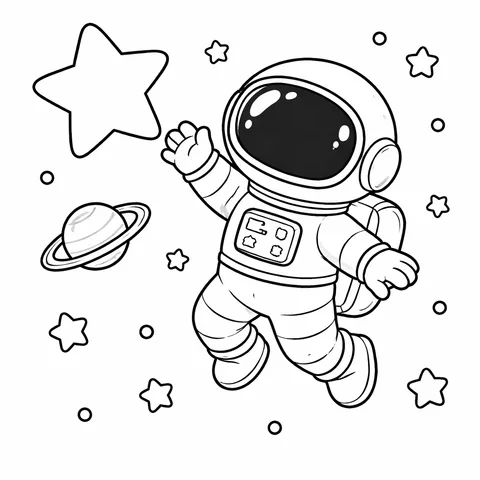
The astronaut floating with a star and the astronaut with a rocket are the busiest pages in the set. Pick them when you have a bit more time and a child who likes detail, because there is more to find and more to talk about once the colouring is done.
If a child finishes early
Ask for a caption. Your child can write a word, a few words or a dictated sentence underneath the picture, and you can write down exactly what they say, including mistakes, in a quiet handwriting so it stays theirs.
The sequence of pages can grow. Give your child a blank sheet and ask them to draw the next part of the journey, the moment after the one on the page, which is harder and more fun than adding another object to the same picture.
Children who want to keep going can build a simple paper rocket from a sheet of A4 and test whether it flies further if it is rolled tightly or loosely. The answer takes a few tries, and the trying is the interesting part.
Print and use notes
Print at 100% / "actual size" on plain white paper. The outlines on these pages are drawn to work at their intended size, and a scaled-down copy gives thinner lines, which makes the small details on the rover and the spacewalk tool harder to colour inside.
Use "fit to page" only if your printer clips the edge of the sheet. Fit-to-page shrinks the page slightly and thins the outlines for the same reason. If you have to use it, check the smallest elements on the page, such as the antenna and the tool in the spacewalk picture, before you hand it over.
Print two copies of any page you plan to use more than once. Two copies of the astronaut on the moon make a matching game for two children, with one holding a copy and covering the astronaut while the other guesses what is underneath from the remaining detail.
Plain white paper is enough. If you have a colour printer and want the planets and stars to look their part, print the background twice and keep one copy in reserve for a child who decides to start over.