Learning
Shape Coloring Pages: Finding Shapes in the Room
Shape pages work best as a looking game. How to name, count and sort shapes with a preschooler, and which page to choose for your child.
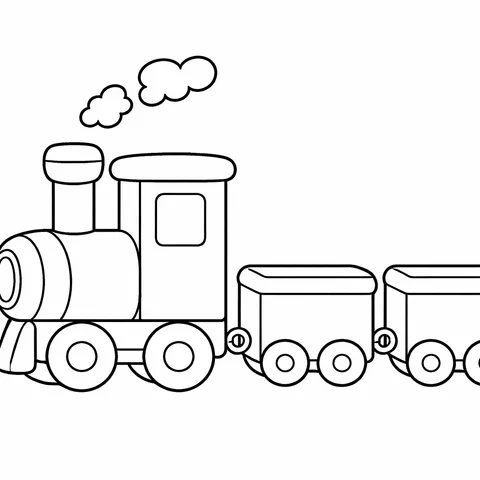
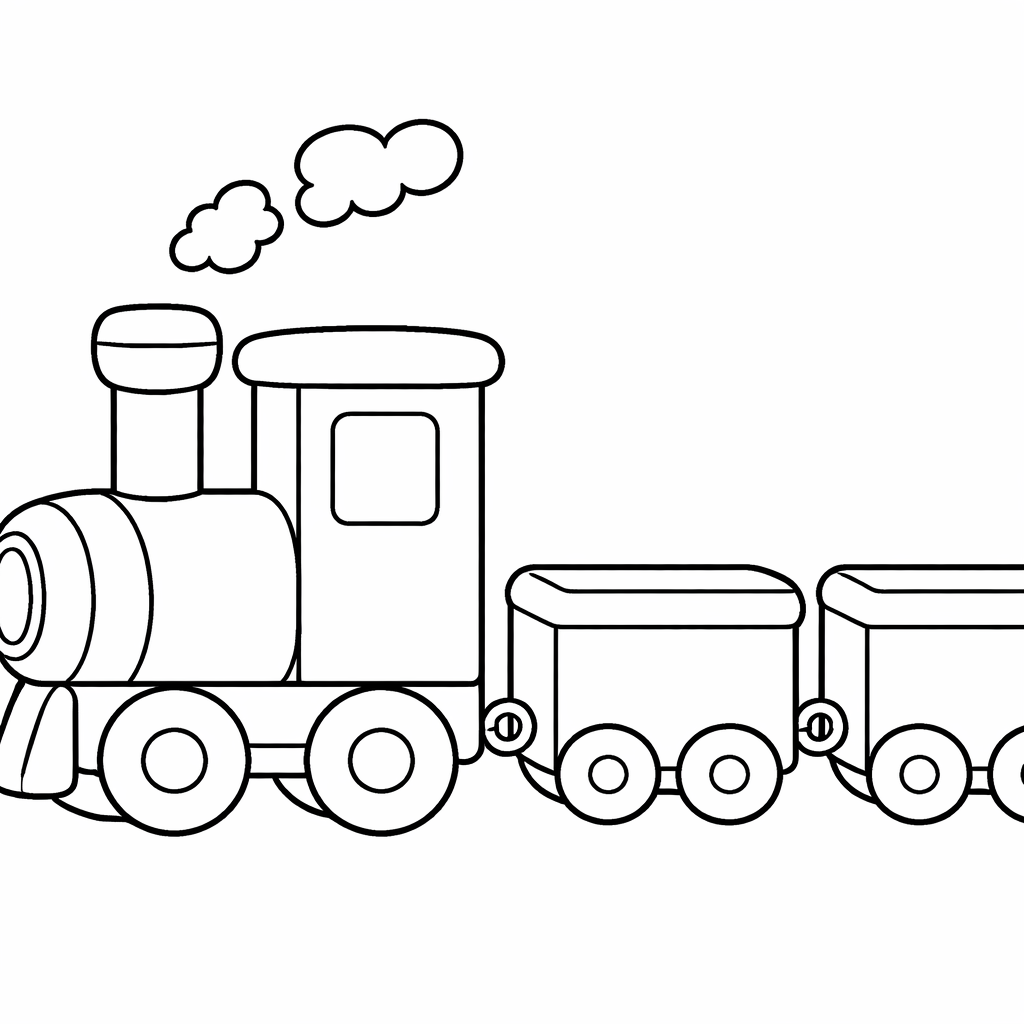
It is Tuesday morning in the block corner and four-year-old Ada is building a tower that keeps falling over. You put a printed rectangle train page on the table beside her and ask her to find something in the room that is the same shape as the carriage she is holding. She puts down a wooden block, looks at the window, looks at the block again, and says "the window is the same." Twenty minutes later there is a page with a coloured train, a tower of blocks on the floor, and a long conversation about which shapes fit inside which.
Shapes are the part of early mathematics that children touch before they ever see it written down, and a printed shape page gives that touch a page of its own. The pages in this set come in two kinds: single large shapes, and objects built out of shapes. Both work, and they work differently.
The activity in short
The activity is about looking. You name a shape, the child finds it, and then the child finds it again somewhere else that was not on the page at all. Colouring takes care of the quiet time, and the naming and finding take care of the talk.
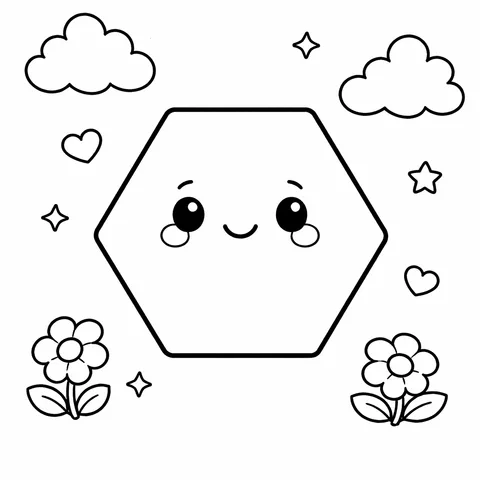
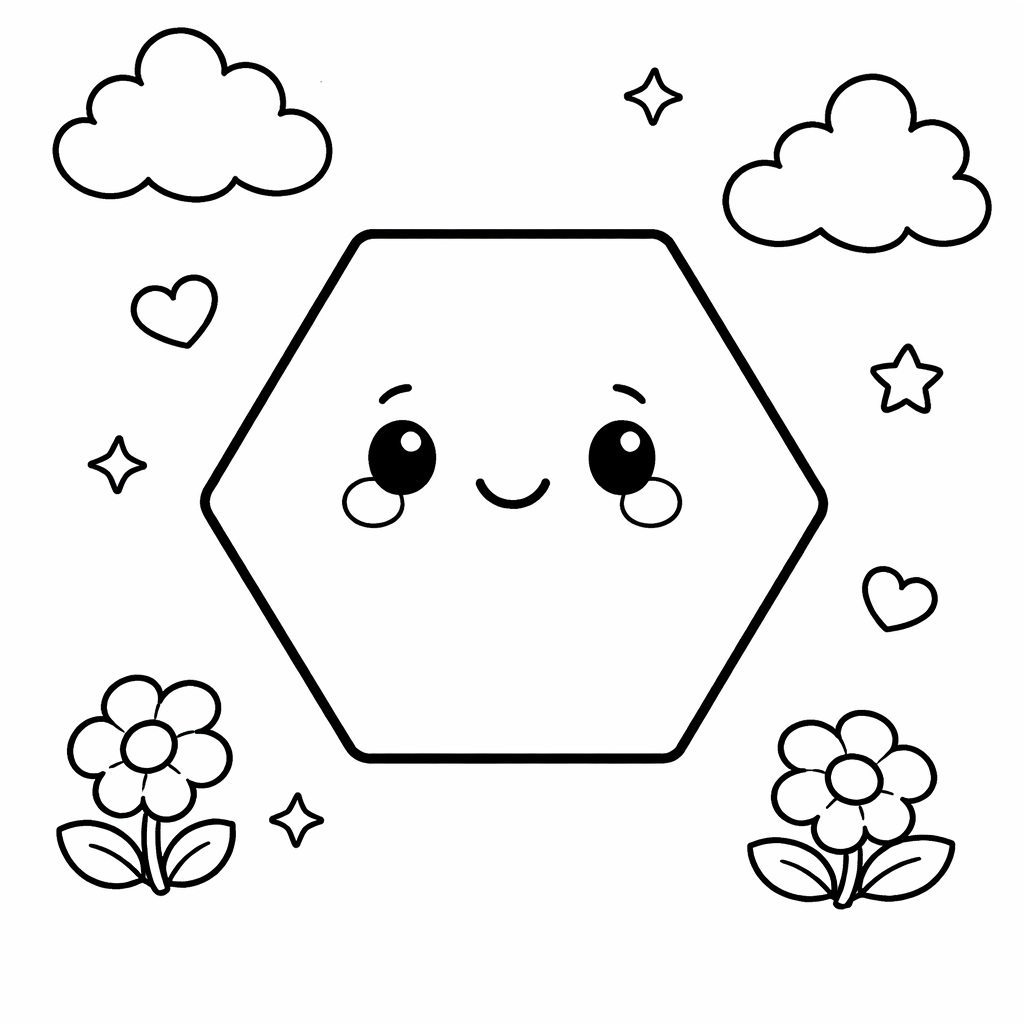
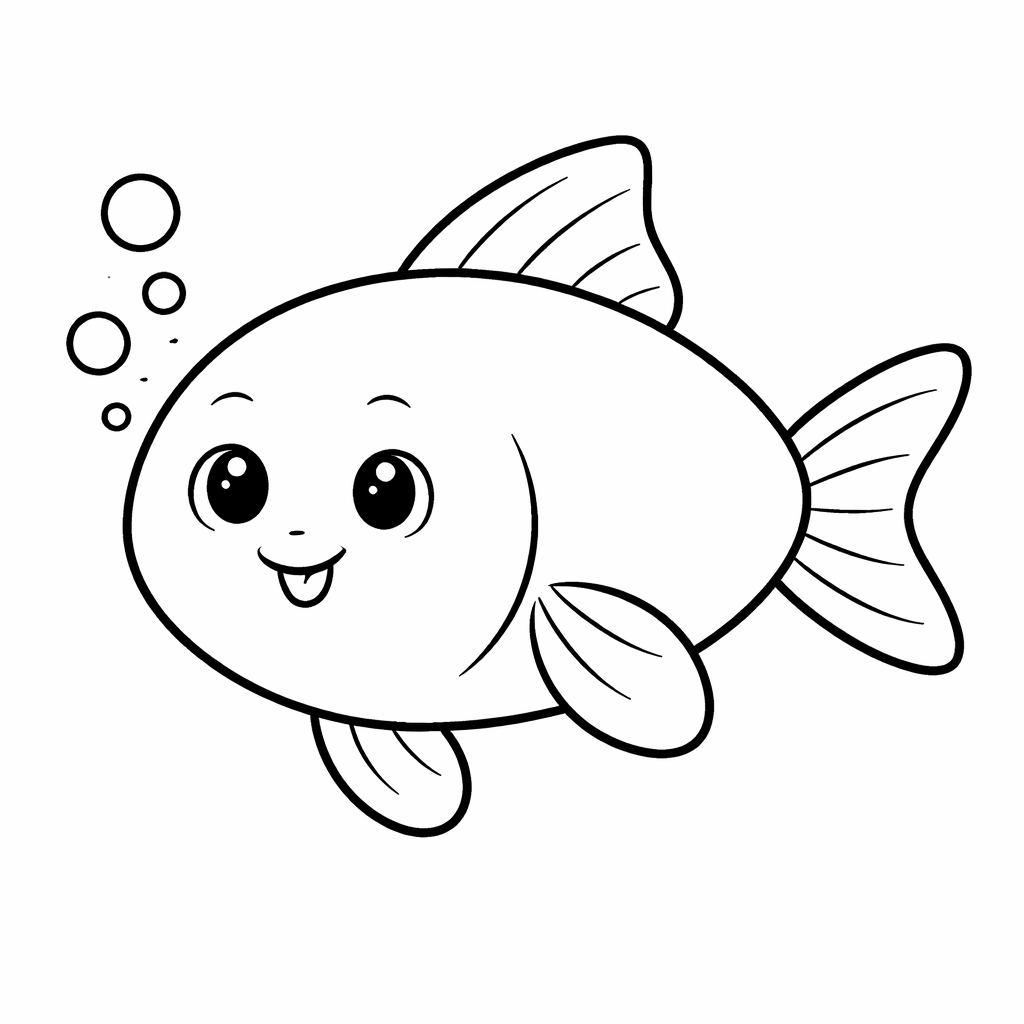
A single shape page, such as the hexagon or the rectangle, gives one clear target and works well with a child who is new to this. A page with an object on it, such as the honeycomb or the oval fish, shows that shapes are the parts that objects are made from. NAEYC's article on discovering shapes and space in preschool works through this idea in detail, and describes young children sorting, matching and talking about where a shape belongs.
Step by step
1. Say the name and trace the edge. Point to the hexagon and trace it with your finger along the outline while you say "hexagon." Let the child trace it after you. The word is easier to remember when it arrives with a hand movement attached to it.
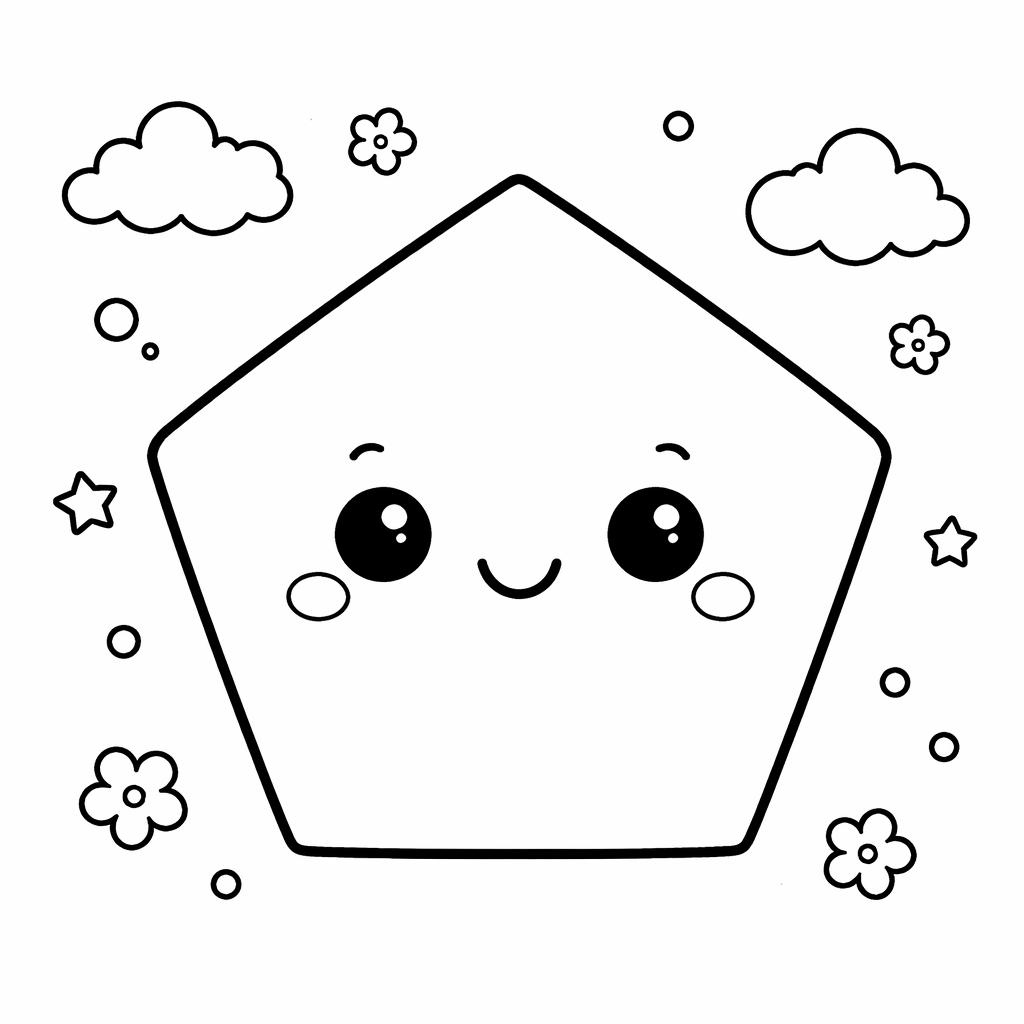
2. Count the sides and the corners. On the pentagon, count five sides and five corners together, touching each one. On the rectangle, find four sides and four corners. Young children handle this well when it is a shared, physical job rather than a question with a right answer attached.
3. Look for it in the room. Ask where else there is a circle, a triangle, a rectangle. Windows, table tops, clock faces, tiles, sliced bread and shoe soles all offer themselves up within a minute. This is the step that makes the shape on the page feel like part of the world rather than something printed on it.
4. Sort something real. If there are blocks, buttons, cut-out shapes or plastic containers nearby, sort a handful into shape groups on the floor. Sorting by shape is easier to talk about than sorting by colour or size, because the boundary is sharp and visible.
5. Draw with the shape. Turn the page over or use a sheet of scrap paper and ask the child to build something out of the shape they have been working with. A robot from rectangles, a house from a square and a triangle, a train made of carriage shapes.
6. Put two pages together. When the first sheet is done, bring out a second shape and ask how the two are the same and how they differ. Two shapes side by side is a much easier comparison than a shape and its name.
What this practises
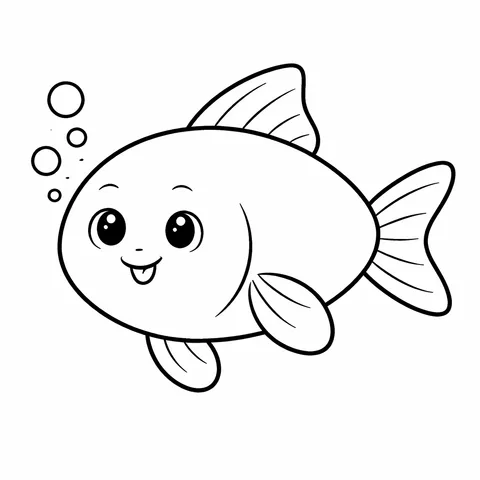
The activity gives a child two ways of thinking about the same object at once. A fish can be a fish, and it can also be an oval with a tail. NAEYC's shapes and space article describes how children in the early years meet geometric ideas through the materials they handle, and how adults can extend that by naming what a child is already doing.
Sorting by shape is also a way of grouping that does not depend on counting or reading. A child who cannot yet name a hexagon can still put the honeycomb with the other hexagons, and the sorting itself carries the idea.
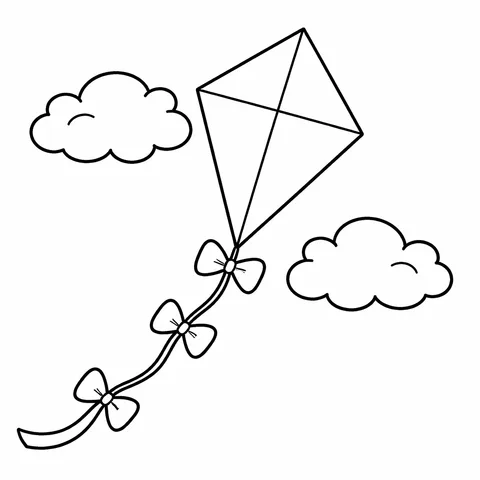
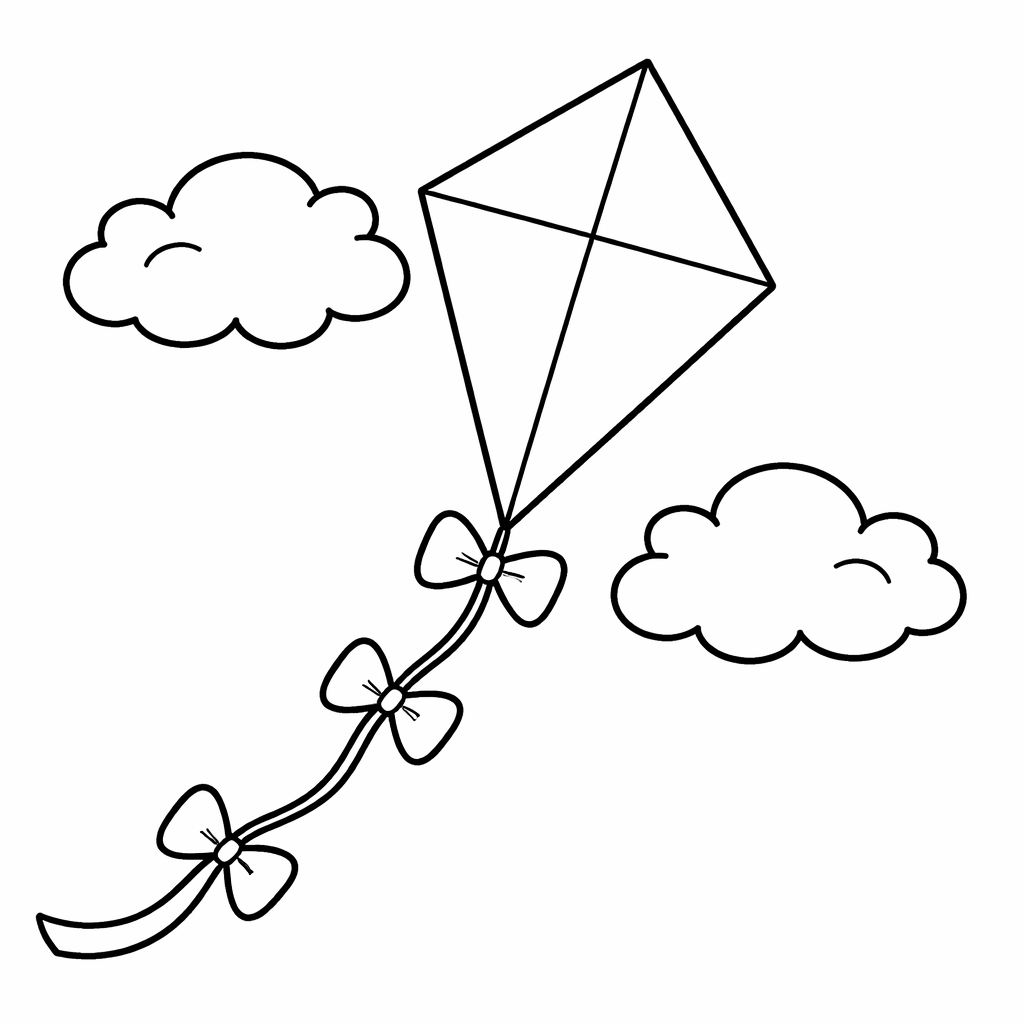
Position and direction come in quietly too. When you ask where the kite is in relation to the sun, or which way the train is pointing, the child is describing space rather than drawing it.
Choosing a page for your child
The single-shape pages, such as the diamond, the hexagon, the oval, the pentagon and the rectangle, are marked for the youngest range. One shape, one outline, plenty of room. They suit a child who wants a long colouring session, and they make a good first page because there is nothing to misunderstand.
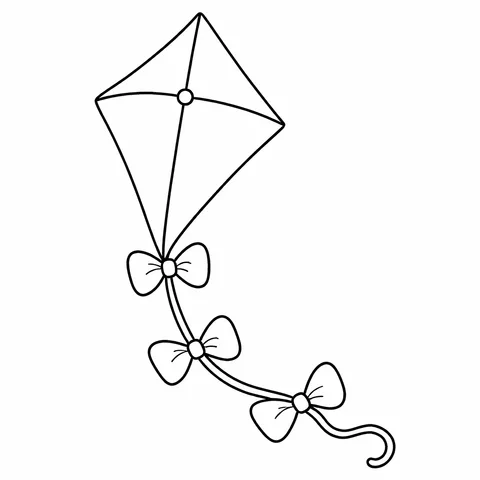
The object pages, such as the diamond kite, the hexagon honeycomb, the oval fish and the rectangle train, are marked for a slightly older range because the child has to see the shape inside the picture rather than being handed it. The diamond window page, which shows the shape both as a plain outline and as part of a window frame, is a useful middle step.
If you are not sure which to start with, the simplest thing is to print one of each and see which one your child picks up. The page they choose first is usually the one they want to work on.
If a child finishes early
Ask the child to draw a picture of their own that is built from the same shape. A page of hexagonal tiles, a window made of diamonds, a train with a long rectangular carriage. Then ask them to count the sides of one of their own shapes, which is usually harder and more interesting than counting the printed one.
Another good extension is to hunt for a shape in the page itself that was not the main one. On the oval fish, the eye is a circle and the tail may be a triangle. Ask which shapes they can find without being told, and let them name the ones they are sure about.
Children who like a bigger project can build a shape city on a large sheet of paper and draw a road between the buildings. The road is usually a long rectangle, and that discovery is worth more than the colouring.
Print and use notes
Print at 100% / "actual size" on plain white paper. The outlines on these pages are drawn for their intended size, and a scaled-down copy thins the lines, which matters most on the single-shape pages where the outline is the entire picture.
Use "fit to page" only if your printer clips the edge of the sheet. Fit-to-page shrinks the page slightly and softens the outlines for that reason. If you have to use it, look at the corners of the pentagon, which are the first thing to disappear when a line gets thin.
Print two copies of any shape you want to keep in play. A cut-out copy of the hexagon and the diamond become matching pieces, and two children can play a sorting game by holding one shape up and hunting for its partner in a set of printed shapes.
White paper is the right choice for the single-shape pages, since there is nothing behind the outline to distract. Card stock only adds value if you plan to cut the shapes out and use them again over a few weeks.