Learning
Number Coloring Pages: A Counting Activity for Preschool
Count and colour on the same sheet. A practical way to use number pages with a preschooler at the table, with page choices and early-finisher ideas.
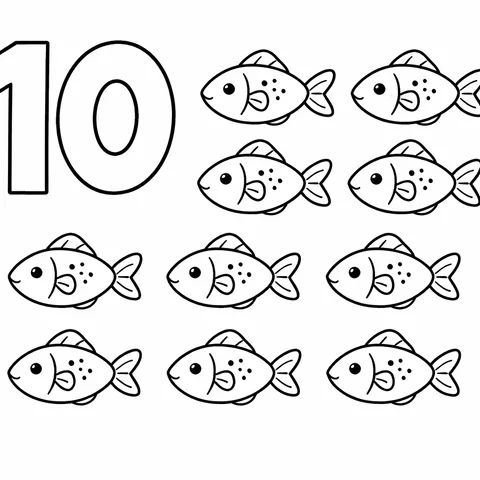
It is half past six on a Tuesday, and the kitchen table is still covered from dinner. You clear a space and set down a printed number page beside the pencils. Your four-year-old pulls the page closer, points at the fish, and says "one, two, three," then pauses to work out whether the fourth one is really a different fish. The counting, the colouring and the talking all happen at once, and the page gives every one of them something to hold on to.
That is the reason to print a number page rather than skip past it. A single large numeral gives a child a shape to trace and a colour to fill in. A group of objects gives them something to count with their own eyes and their own fingers. Depending on the room and the mood, you can use one page for one purpose or the other, and the notes below cover both, along with what to do when the page is finished before the crayons are.
The activity in short
The activity is deliberately plain. A child meets a number, a group of objects, or both on the same sheet of paper. They count the objects in their own way, they colour what they find, and they say the number out loud as often as they like. Nothing has to be finished, and no answer is being checked.
You can run this in five minutes at the kitchen table or build it into a longer maths corner in a classroom. What changes is how much you talk and how many pages you offer, not the shape of the task. NAEYC's writing on nurturing early maths play makes the same point at greater length: young children meet mathematical ideas through play and everyday conversation rather than through exercises and worksheets.
Step by step
1. Offer one page, not a pile. Put a single sheet in front of your child and let the rest of the stack stay out of sight. A small number of clear choices makes it easier to stay with one, and it makes the conversation about that page rather than about which page to choose next. If you are running this as a table activity in a classroom, offer two or three pages face up and let the children move between them.
2. Count before you colour. Point to each object in turn and count it together, slowly enough that everybody can follow. Then count it again in a different way, touching each one, so that the count is heard and felt rather than only recited. Children who have not yet got the hang of counting in order will happily count three, two, one, and it is worth honouring that attempt rather than correcting it in the moment.
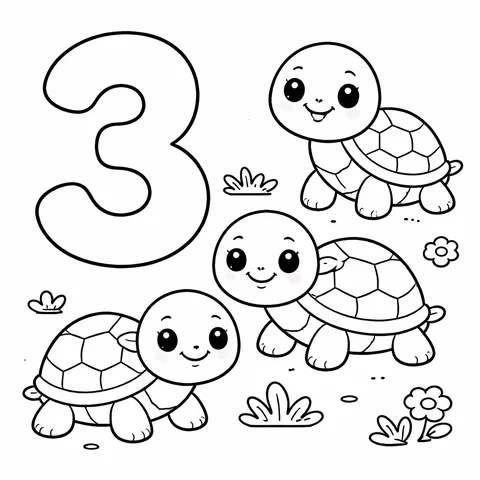
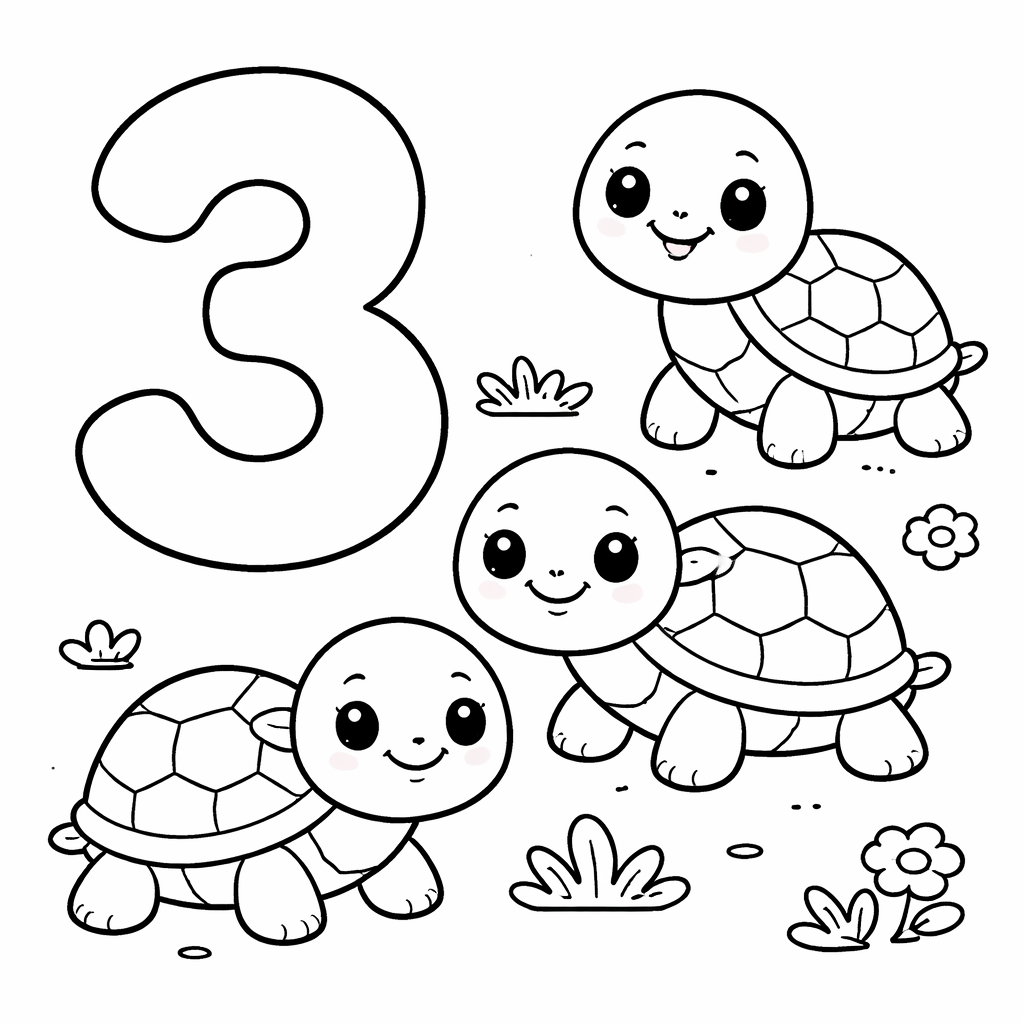
3. Colour one object for each number. On a page with three turtles, invite your child to colour one turtle while they say "one," the next while they say "two," and the last while they say "three." The link between the word and the object is the whole point of the activity, so keep it in the spoken part of the game rather than in a list.
4. Find the numeral and say it. When the page also carries the written digit, point to it and say the number together, then let your child trace the numeral in the corner or in the margin. Tracing is slow, which is the point: it gives the shape of the digit some attention that colouring a background does not.
5. Compare two pages. When the first sheet is finished, bring out a second one and ask which page shows more. Say the two numbers out loud, then ask what comes between them. The number path games described in NAEYC's magazine for teaching young children work in a similar way, giving children a physical route along a line of numbers so that the distance between two quantities becomes something they can walk.
What this practises
The page asks a child to hold a number in mind and match it to a group of things. That is the idea behind the counting games in NAEYC's early maths guidance: the quantity and the numeral are two ways of pointing at the same thing, and children meet both when the page is on the table.
Counting on the page is one doorway into that. Families already count in daily life, on the stairs, while setting out cups for breakfast, or counting the cars going past the window. When those everyday moments are named as counting, a number starts to mean an amount rather than only a mark on a sheet of paper.
A larger number also opens the door to one more and one fewer. You do not need to teach it. If your child says "there are ten fish" and you answer "ten and one more is eleven," an idea has been offered in a single sentence, and the child is free to ignore it or pick it up later.
Choosing a page for your child
The plain numeral pages, such as the large number 1, 2, 3 and 4 sheets, carry a single digit and little else. They suit a child who is still getting used to what a numeral looks like, or who simply wants a big shape to colour for its own sake. These are the youngest pages in the set.
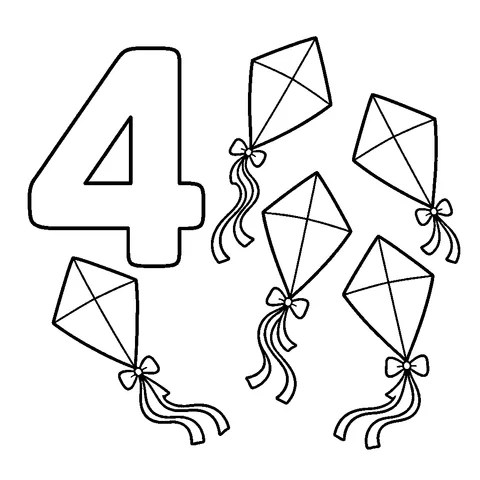
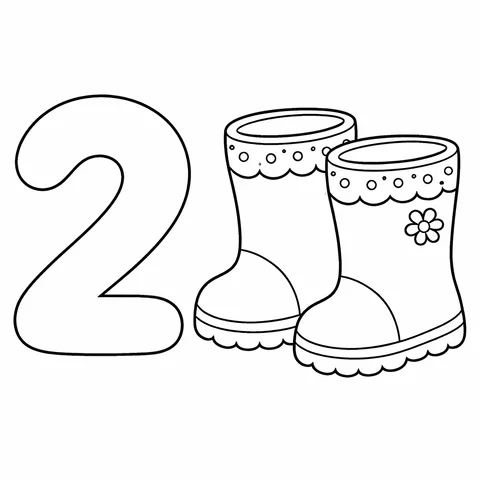
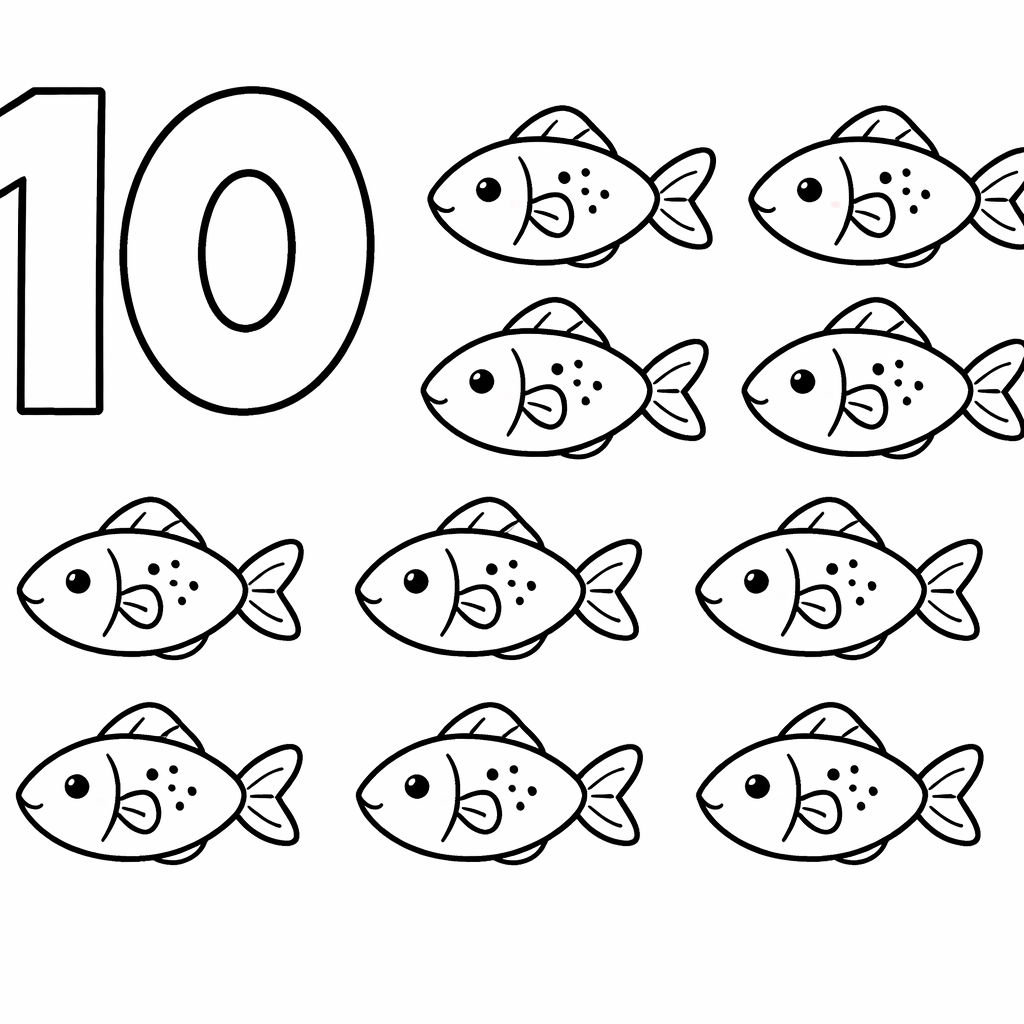
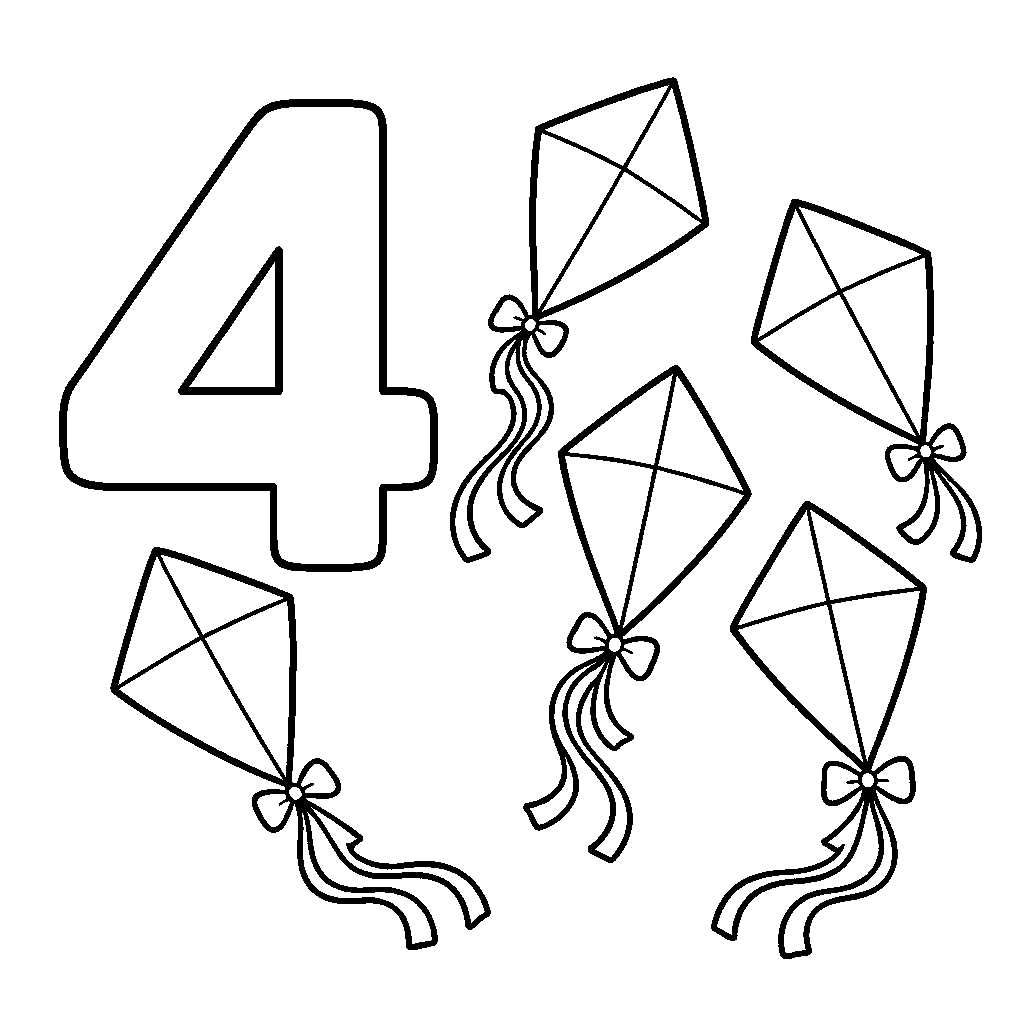
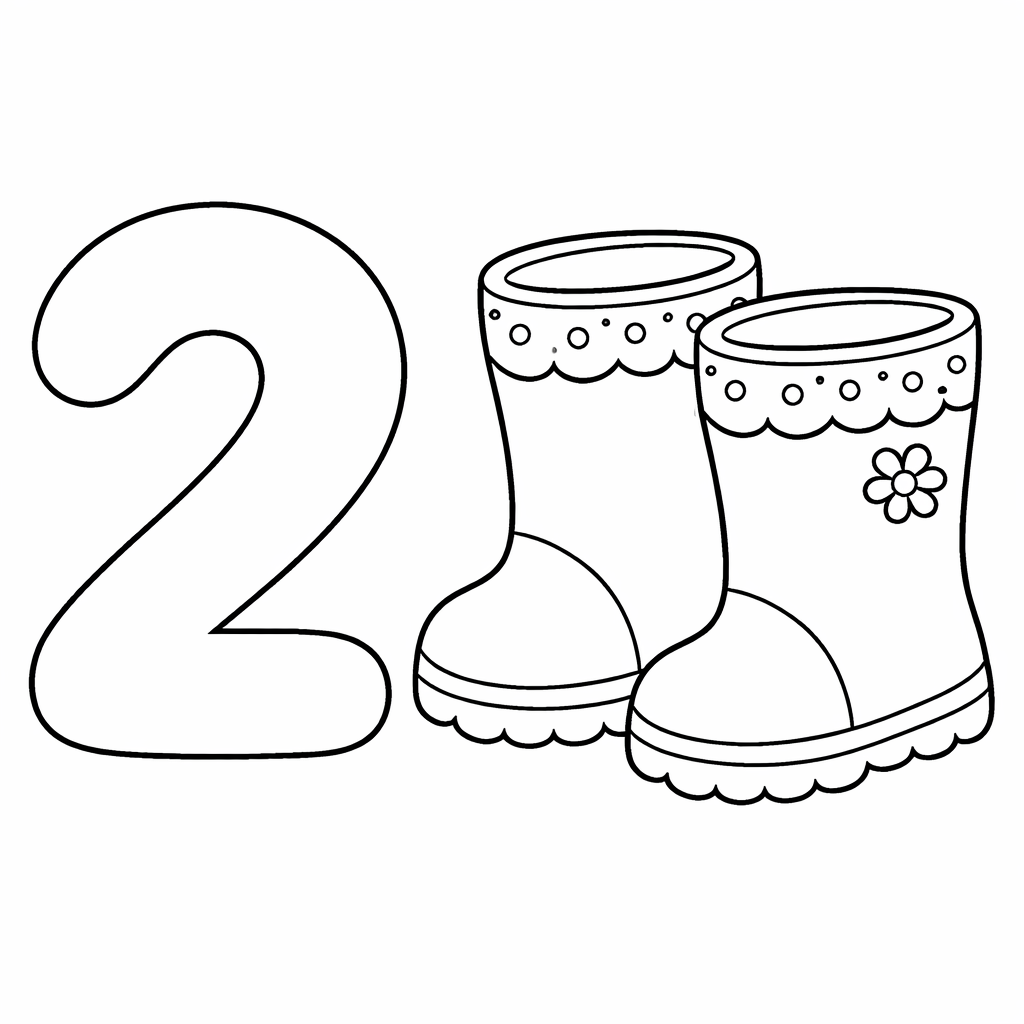
The pages with objects in them, like the three turtles, the four kites, the two boots and the ten fish, give a group to count. They are marked for a slightly older range, usually four to seven, because counting the group is one step beyond colouring the shape.
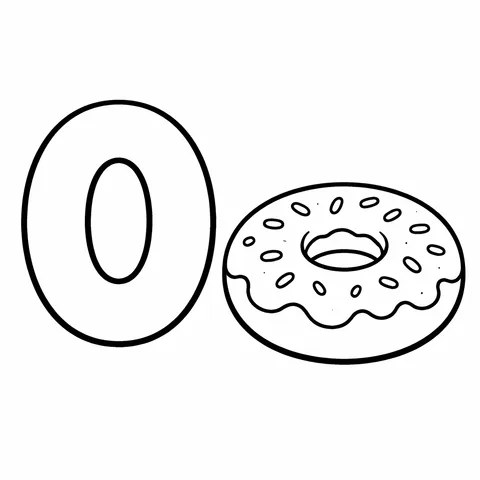
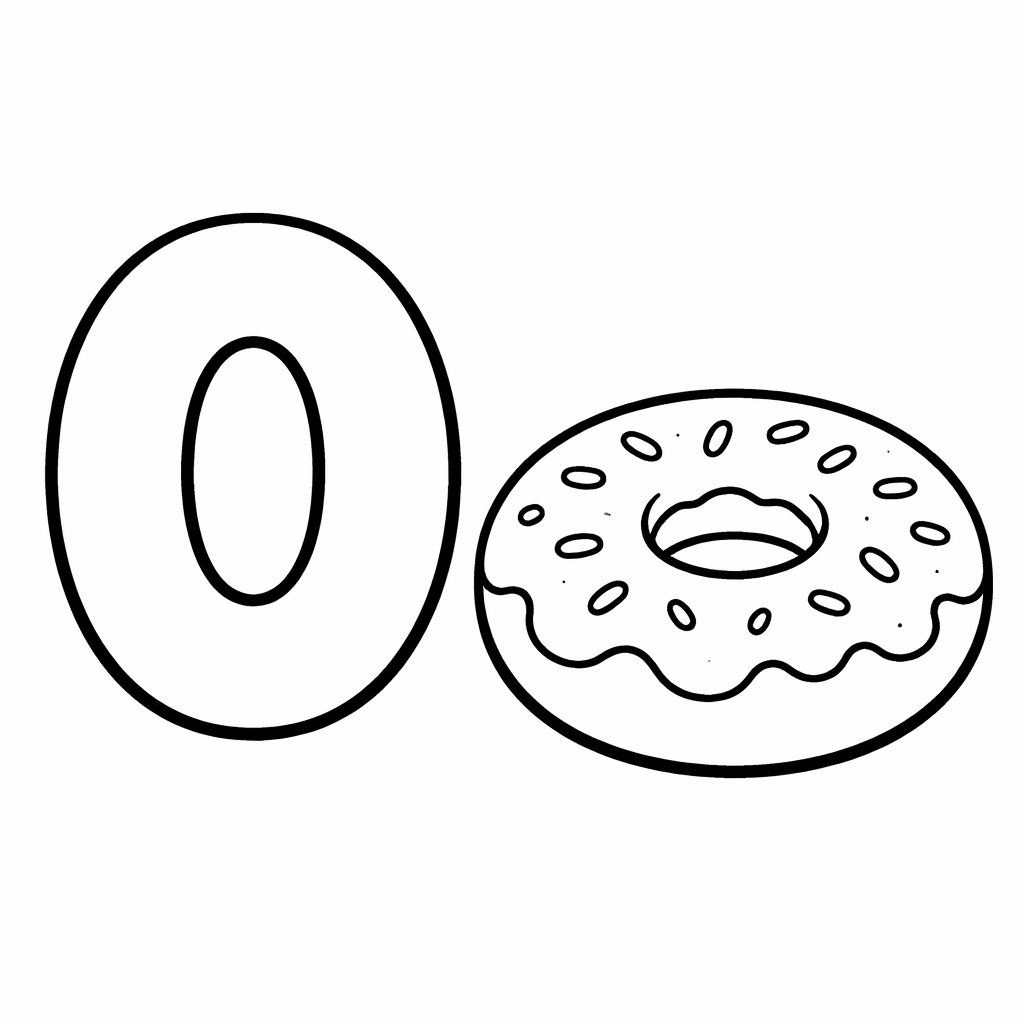
The zero page is a good talk rather than a counting exercise, because there is nothing on it to count. Ask what your child would add to make it one, or what an empty plate looks like at dinner. The one rocket page has a similar quality, with only a single thing to find and colour.
If a child finishes early
Ask for the number to be written in the corner of the page. Even a rough attempt at the shape of the digit is worth something, and writing it after the colouring makes the page look finished rather than abandoned.
The ten fish page leaves plenty of room for extra counting. You can ask a child to colour only the odd fish, or to count how many fish they coloured in red once they have finished the job. Both prompts stretch the counting without adding any new materials.
Children who want a bigger job can draw a group of their own. Hand over a sheet of scrap paper and ask for three of something they choose, or one, or ten, and then count their own drawings together. A drawing of three shoes made at the table is more work than the printed page and teaches the same thing.
Print and use notes
Print at 100% / "actual size" on plain white paper. The outlines on these pages are drawn to work at their intended size, and a scaled-down copy gives thinner lines that are harder to stay inside, especially for a child who is still building fine motor control.
Use "fit to page" only if your printer clips the edge of the sheet. Fit-to-page shrinks the whole page slightly, which thins the outlines for the same reason. If you have to use it, check the smallest detail on the page before you hand it over.
Print a second copy of any page you plan to use twice. Two copies of the four kites page turn into a matching game, with one child colouring and another holding the copy and covering the kites one by one while saying the numbers along the way.
Plain white paper is enough for all of this. If you happen to have card stock, a laminated copy can stay on a table and be counted again over a few weeks without wearing out.