
Story
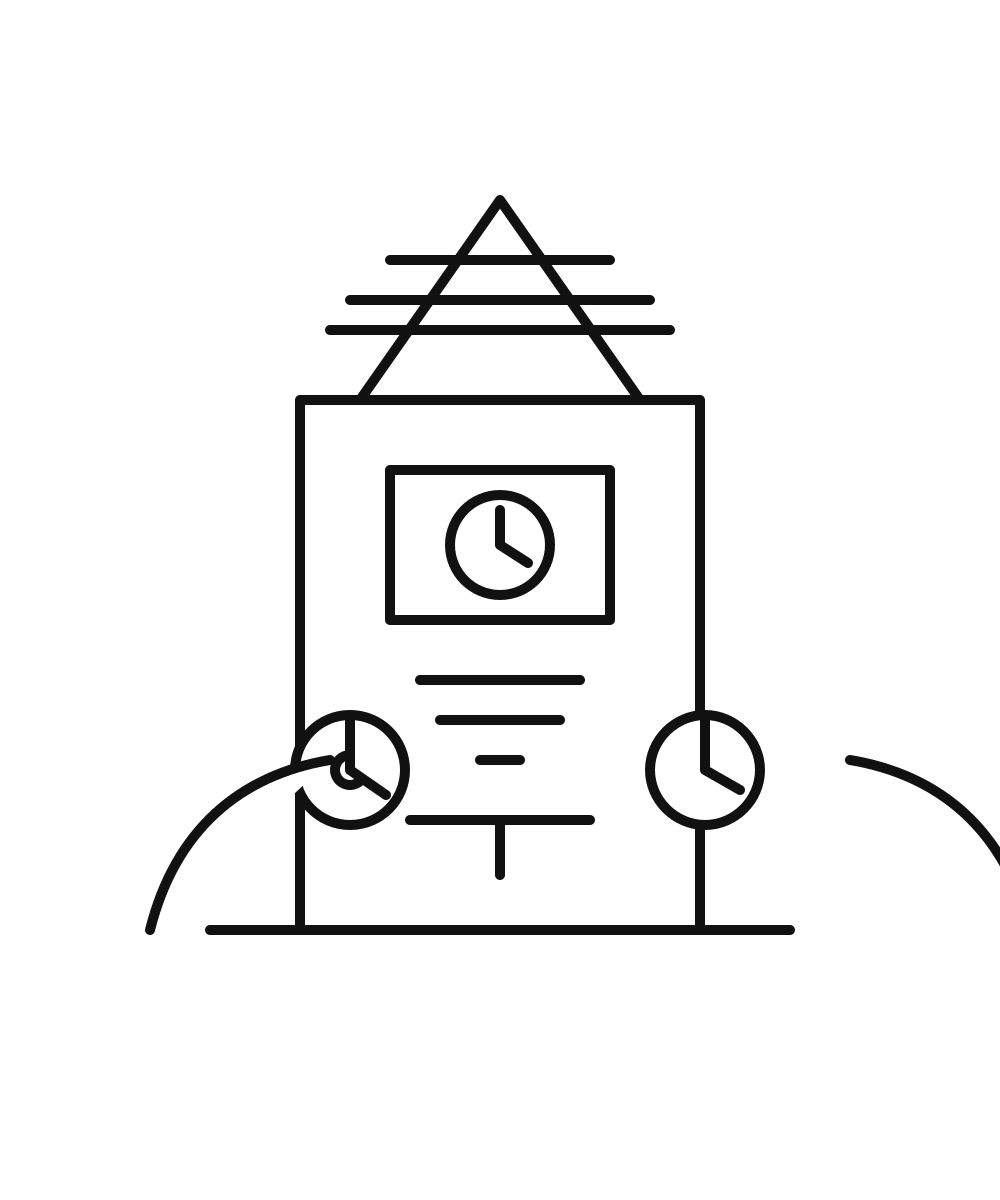
The clock tower above town chimed at seven every morning. Baran knew its sound even from bed: three deep notes, followed by the flapping of pigeons in the square.
But on the morning of the Spring Festival, the clock stopped at seven twelve. The hands stood side by side, and people gathered below, holding up watches that all showed different times.
The drummers were ready for the parade, but the festival organizer wanted everyone to begin together. Baran ran to the workshop of his grandfather Cem, the town clockmaker.
Cem’s knees hurt that morning, and climbing the tower stairs would be difficult. “A stopped clock tells us it has a problem,” he said, “but not what the problem is.” Baran collected a small lantern, a screwdriver, and the tower key.
Cem smiled. “Take patience too,” he advised.
As Baran walked toward the tower, he noticed the hopeful faces of the waiting crowd. He decided to listen to the clock before trying to fix it.
The tower was cool inside. Baran shone his lantern over the gears.
None of the large teeth were broken, and the pendulum swung freely. But the rope that lowered the clock’s weight had stopped halfway down.
Baran did not tug it. First, he listened to a faint scratching above him.
A thin straw dangled from a narrow vent beneath the roof. He remembered his grandfather’s advice and thought through the clock’s movement.
The descending weight pulled the rope, the gears turned, and each swing of the pendulum moved time forward at an even pace. A straw caught around the rope might have jammed the weight.
Before stepping onto a narrow platform, Baran looked around carefully. Beside the vent was a swallow’s nest.
He could hear the weak peeps of chicks inside. He would not touch the nest.
Pulling the straw out in one quick motion might frighten the birds or knock their home loose. He needed a safe way to reach the weight.
Baran climbed down and told the people in the square what he had found. He asked Rauf the carpenter for a long hook, but Cem warned that a metal hook might touch the nest.
Nermin brought a thin strip of woven reed from the bakery. Baran tied it to the end of the hook, making a soft loop.
Instead of pulling the straw, he could lift it away from the weight. Everyone climbed the tower quietly.
Cem showed Baran how to balance on the platform. Baran guided the hook toward the vent.
On his first try, the loop missed the straw. On the second, it caught around the rope; Baran pulled back at once and began again.
This time, he guided the loop toward the tip of the straw, not the clock’s weight. Holding his breath, he lifted gently.
The straw loosened but did not come free. Rauf called out directions from below while Cem watched the rope.
Baran worked with small, patient movements until the straw slipped away from the weight without touching the nest.
When the straw fell onto the platform, the weight dropped a few inches. The gears moved, but the clock still did not run.
Baran noticed that the rope had been wound too tightly during yesterday’s maintenance. The straw was gone, yet a knot still narrowed the weight’s path.
Cem explained how to loosen it and guide the rope back into its groove. Baran used the screwdriver to lift the rope, keeping his fingers away from the gears.
When the knot came free, the weight descended slowly. The pendulum swung back and forth.
First came one tick, then a steady tick-tock. Baran looked at the clock face.
The short hand pointed to seven and the long hand to twelve. Someone below called, “What time is it now?” Baran smiled.
“The clock is moving again, but let’s make sure everyone’s watches agree before the parade begins.” Cem showed him the small adjustment lever. Together they set the clock using the town’s shared noon signal, bringing the different watches closer to the same time.
Baran and Cem waited in the tower while people in the square set their watches by the shared bell. A few minutes later, the drummers signaled that they were ready.
The tower bell rang three times. This time, the sound did not falter; each note followed the next at an even interval.
The parade began. Children waved ribbons, Nermin carried a tray of rolls, and wooden horses made by Rauf marched across the square.
Baran realized that a repaired clock was not the only thing that had started the festival. While they waited, people had helped one another, stayed patient, and agreed on a shared signal.
That afternoon, his grandfather gave him a small brass gear. “It’s one of the smallest pieces inside a clock,” Cem said.
“By itself it can’t tell time, but working with the other pieces, it matters.” Baran turned it in his palm. The next day, he would draw how he had examined the clock and share it at the workshop.
The first step in repairing something, he now knew, was understanding how it worked. The morning after the festival, Baran returned to the tower with his grandfather.
This time, they were not there to fix a problem but to see whether the clock kept running steadily. Baran counted each tick for an hour and wrote the results in his notebook.
Then he listened to the shared bell in the square; the tower clock was slightly out of step. Cem explained that temperature and worn parts could cause small differences over time.
Baran learned that a clock might not stay perfectly exact every day, but regular care and careful adjustments could keep it dependable. Back at the workshop, he placed the brass gear on the workbench.
Beside it, he wrote three notes: observe first, protect living things, and try small steps. Cem suggested adding a drawing.
Baran sketched the tower’s weight, rope, and gears. He also drew the swallow’s nest, because although the birds seemed to have caused the trouble, the real problem included a knot nobody had noticed during maintenance.
Baran understood that a machine could have more than one cause for a problem. From then on, he told children who visited the workshop that anything that looked broken should first be examined carefully.
He opened an old clock for them and showed its parts; together they discovered what each one did without forcing anything.