
Story
In the seaside town of Windhaven, the breeze was part of everyone’s day. Nermin the baker opened her windows to cool fresh loaves, and fishermen raised their sails according to the wind.
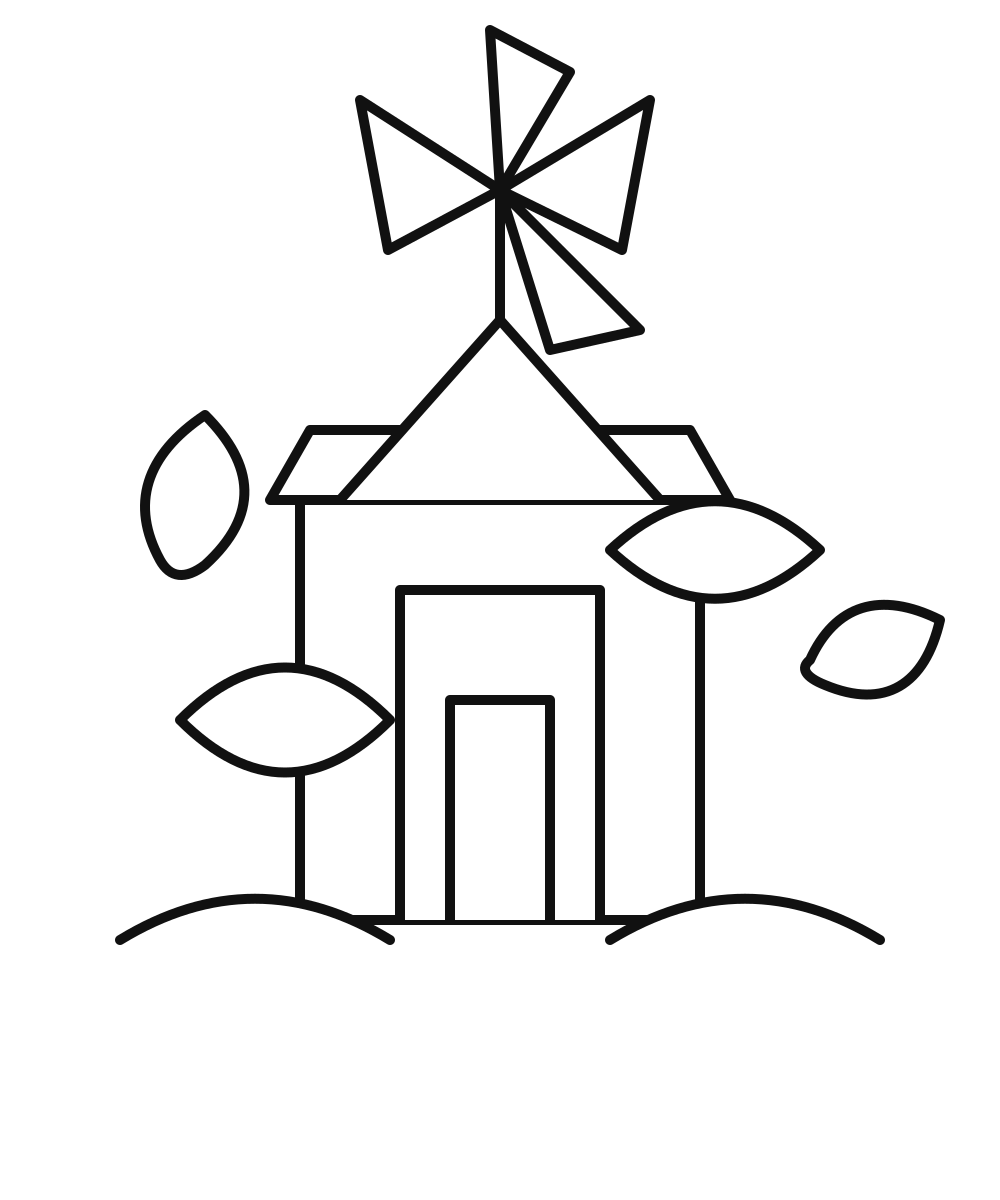
Ada liked counting the blades of the old mill on her way to school. One morning the mill stood perfectly still.
Flags drooped at the harbor, and laundry hung motionless on the lines. The air was so quiet that people could hear the seabirds beating their wings.
The townspeople said the stillness would pass. But when evening came without even a whisper of a breeze, Ada wondered why the little brass bell at the top of the mill had fallen silent.
Her grandfather Cem had told her that the bell played a different note whenever the wind touched it. Ada took her old binoculars and notebook up the hill.
The mill door was locked, but the grass around it was bent neatly in one direction, as if something had combed it. Perhaps the wind had not vanished.
Perhaps something was blocking its way.
The next day Ada returned with her grandfather Cem. His key turned stiffly in the old lock.
The room no longer smelled of flour; a fine layer of dust covered the floor because the mill had been idle for years. Ada noticed faded drawings on the wall.
They showed a narrow air passage running beneath the hill. It once carried sea breezes up to the mill’s sails.
At the entrance, dry leaves and slender twigs spilled out. A magpie had collected shiny threads and moss there to build a nest beside the passage.
Ada stepped back when she saw three tiny chicks inside. “We can’t disturb them,” she said.
Cem agreed. They did not need to chase the birds away; they needed to find another path for the air.
Ada sketched the passage in her notebook and had an idea: they could build a small wooden guide around the mill to direct the breeze away from the nest.
Ada shared her idea in the town square. Rauf the carpenter offered to make sturdy, smooth boards for the guide.
Nermin brought beeswax from the bakery to seal their edges. Yusuf the fisherman donated a piece of an old sail; it could become a flexible vane at the end of the guide to catch the breeze.
Everyone wanted to help, but Ada asked them to work quietly near the nest. The children held the measuring rope while the adults cut the boards.
Rauf explained that if the guide sat too low, it would sweep the grass, and if it tilted too steeply, the breeze would rise too quickly. Ada studied the old drawing and worked out an angle.
On their first try, the fabric vane flipped backward and sent the air toward the nest again. Nobody blamed anyone.
Ada adjusted her sketch, and Yusuf resewed the sailcloth. This time the vane fluttered, but the mill still did not turn.
Ada realized the air could pass through; it simply was not rising high enough to reach the bell.
Ada carefully examined the stone steps beneath the mill. Along their edges were tiny air holes, built there long ago.
Most had been covered by soil and moss. She thought they could clear them without disturbing the chicks.
The children brought soft brushes, and Cem loosened the earth between the stones with a thin wooden stick. Each time an opening cleared, a piece of dry grass trembled.
When they uncovered the last hole, a cool current slipped beneath the hill. The fabric vane turned, and the guide carried the breeze toward the mill.
The blades moved a little, then began to turn slowly. The brass bell rang one clear note.
Ada nearly shouted with delight, but she saw the chicks and lowered her voice. The magpie perched on the nest and tilted its head.
Now the wind could pass through the mill while the nest remained sheltered. Ada understood that a good solution did more than make something work; it made room for everyone who lived there.
The townspeople gathered by the mill the following evening. No grand celebration had been planned.
Nermin brought warm rolls, and Yusuf folded little paper sails for the children. Rauf tied a narrow ribbon beside the wooden guide to show how strongly the wind was blowing.
Whenever it fluttered, the bell played another note. Ada wrote in her notebook about the silent morning, the time they had waited to protect the nest, and what they had learned from three attempts.
“The wind didn’t forget its song,” said Cem. “We made it a new way through.” Just then the magpie brought a bright blue thread and tucked it along the edge of the nest.
Ada smiled; it seemed like a small sign that the bird had accepted the new arrangement. After that, the townspeople used the mill not only to grind grain but also to observe the moving air.
Children drew the ribbons, recorded the wind’s direction, and noted which bells rang as the seasons changed. Ada’s solution had returned an old sound to the town.
More than that, it had taught everyone to look closely and think together.