Who is it for?
Suggested for ages 3-5, with a very easy level. Preview the amount of detail and compare it with the child’s interests and comfort using drawing tools. The age range is a guide, not a fixed limit.
A free Letters coloring sheet for ages 3-5. Download the high-resolution image or print its PDF at home and in the classroom.
Choose a color to fill enclosed areas, or use the brush to draw freely. Your work stays in this browser.
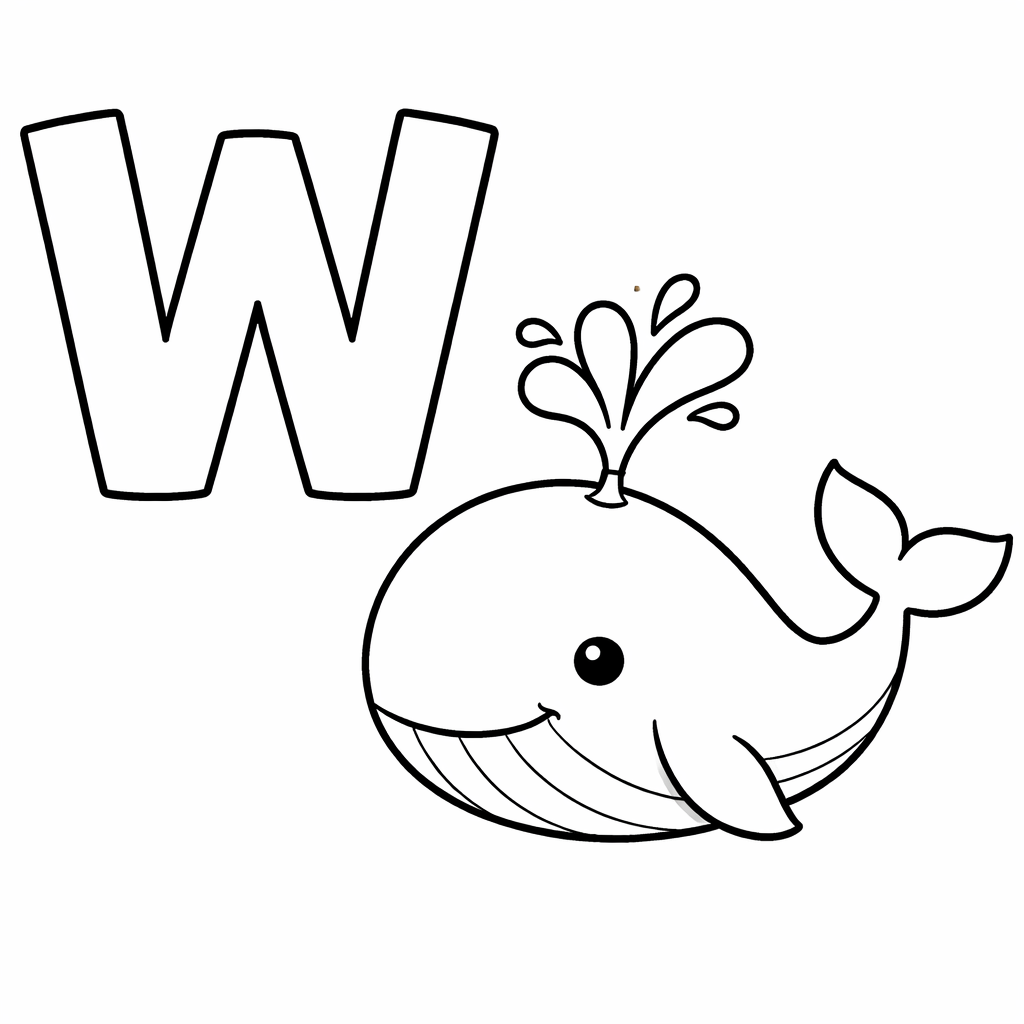
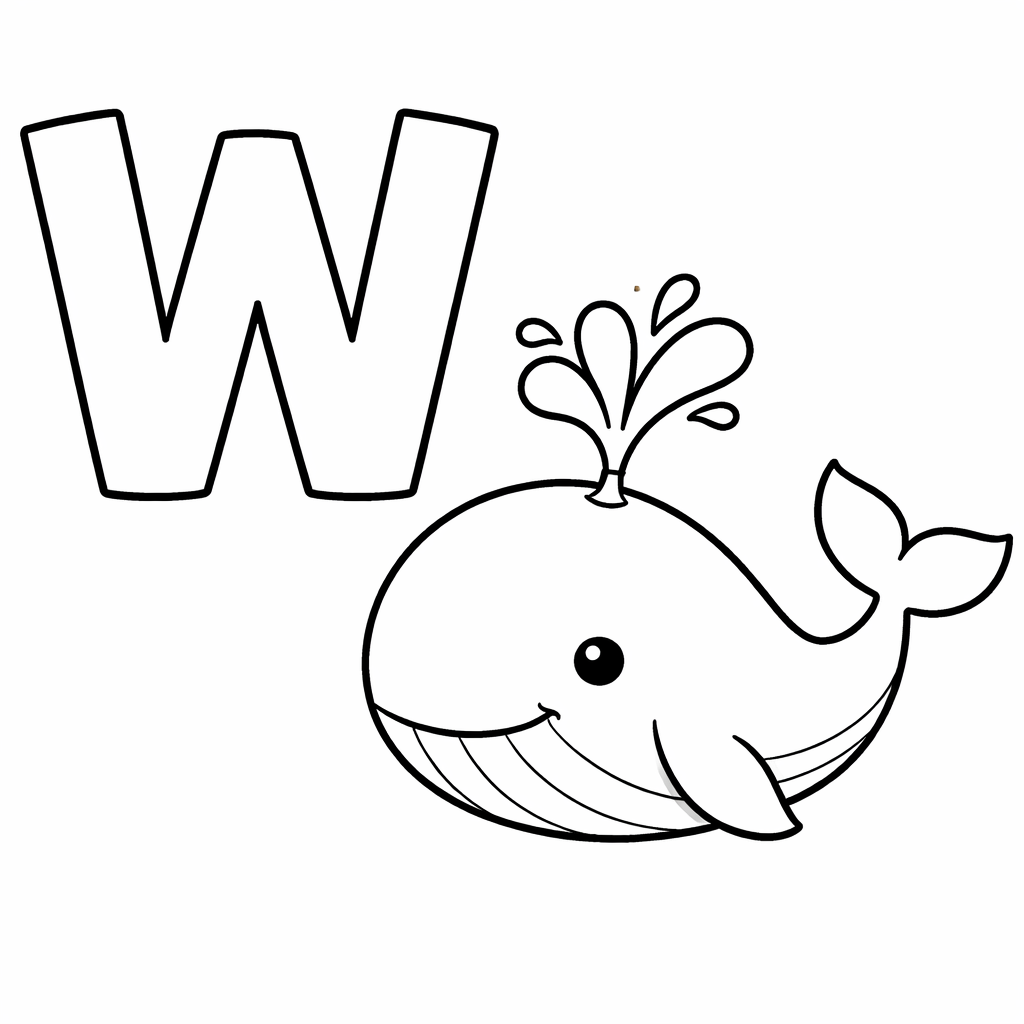
This black-and-white page features one very large, plain uppercase letter W beside one friendly whale in a simple side view with a small curved water spout. It is part of Letters; the child can choose the colors and add details to the scene.
Suggested for ages 3-5, with a very easy level. Preview the amount of detail and compare it with the child’s interests and comfort using drawing tools. The age range is a guide, not a fixed limit.
Treat the item beside the main figure in this w for whale page as its own color area. Ask the child how the two might be connected, or invite them to add a small linking detail.
The PNG is 1024 × 1024 pixels. The one-page PDF uses US Letter paper. For A4, choose “Fit to page” in print preview; black-and-white or grayscale printing can reduce color-ink use.
A large uppercase W sits next to a whale drawn in simple side view. The letter is made of four straight strokes joined in a zigzag, wide enough for a child to cover with broad crayon strokes. The whale has a rounded body, a small curved water spout coming from the top of its head, a tail at one end and a single eye. Nothing else appears: no sea, no waves and no boat.
Say the letter name W and model its consonant sound /w/ at the beginning of “whale.” Trace W in the air from top to bottom, then point to the whale’s body, eye, tail and spout as you name them. Colour the letter and whale, and count any clear details in the picture. If your child wants to add another whale, draw it in the blank space. W is a consonant letter, so it does not have a “short” vowel sound.
Children who confuse W with M usually do better here than with a letter that has no picture attached. Give the counting part more weight than the colouring and let the child lead the count. Expect some to draw water straight out of the whale's mouth instead of the spout, and that mix-up at this age is not worth correcting. Ten minutes suits this age group.
Full size keeps the four strokes of the W the same thickness as they were drawn, so the zigzag does not fill in. Use plain white paper; a matte finish stops crayons skating over the white gap inside the letter. Look at the preview around the tail fin, which sits close to the margin on some printers. If it is clipped, fit to page will bring it in slightly. Print on one side.