Who is it for?
Suggested for ages 3-5, with a very easy level. Preview the amount of detail and compare it with the child’s interests and comfort using drawing tools. The age range is a guide, not a fixed limit.
A free Letters coloring sheet for ages 3-5. Download the high-resolution image or print its PDF at home and in the classroom.
Choose a color to fill enclosed areas, or use the brush to draw freely. Your work stays in this browser.
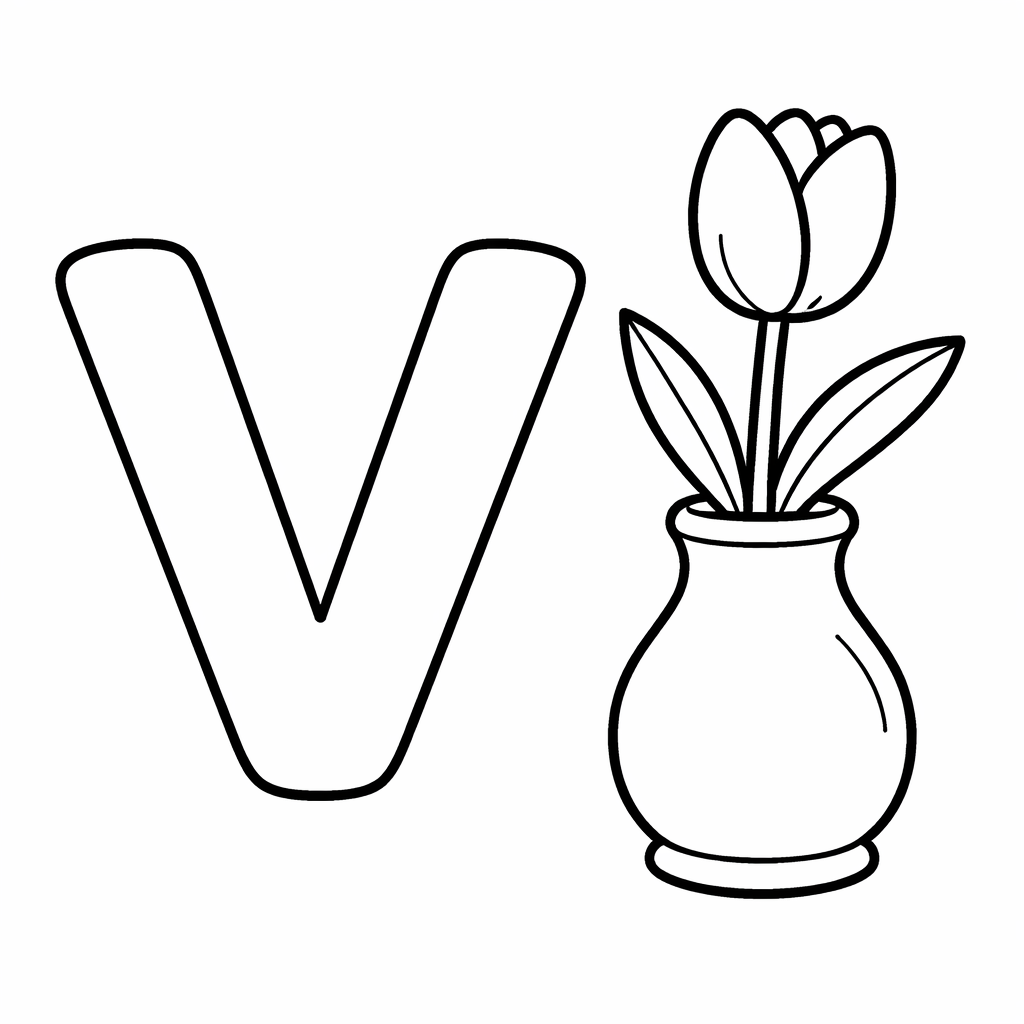
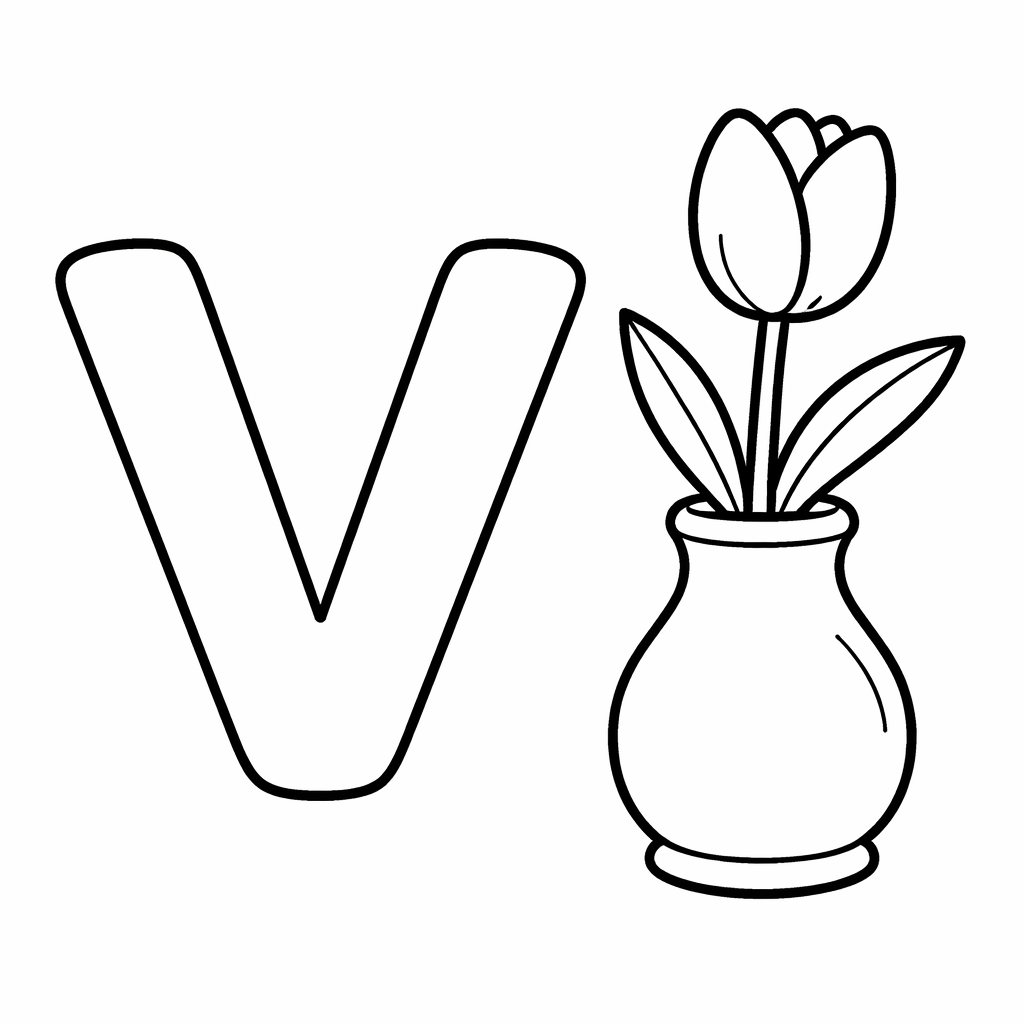
This black-and-white page features one very large, plain uppercase letter V beside one simple flower vase with a single large tulip stem and no lettering. It is part of Letters; the child can choose the colors and add details to the scene.
Suggested for ages 3-5, with a very easy level. Preview the amount of detail and compare it with the child’s interests and comfort using drawing tools. The age range is a guide, not a fixed limit.
Treat the item beside the main figure in this v for vase page as its own color area. Ask the child how the two might be connected, or invite them to add a small linking detail.
The PNG is 1024 × 1024 pixels. The one-page PDF uses US Letter paper. For A4, choose “Fit to page” in print preview; black-and-white or grayscale printing can reduce color-ink use.
A single large uppercase V fills the left side, its two strokes meeting at a wide point near the bottom. To the right sits a plain vase with a narrow neck, a rounded belly and a flat foot, holding one tulip on a long stem with a single large bloom. The tulip is drawn as a simple cup of petals, without any inner lines, and no leaves or other flowers appear. The two shapes never touch.
Trace the V in the air with a finger first, making the point at the bottom, and say the letter name each time. Then read vase together and ask your child to hear the first sound in it. Colour the V in one colour and the vase in another, leaving the tulip until last so it stands out against the stem. Offer a second piece of paper and ask them to draw a different flower in the same vase. After that, hunt around the room for three things whose names begin with the same sound as vase.
Use this in a letter V lesson, and keep the sound game short because a v sound is harder for some children to hear. Allow about ten minutes in total. Watch for children who say the letter name as a word, and remind them that the sound is what matters. The tulip offers a good place to talk about size, since the bloom is drawn larger than the vase neck. In a group, ask each child to bring one object that starts with the same sound.
Full size printing keeps the V wide and open. Use plain white paper and print on one side only; the pointed bottom of the V presses hard and can leave a mark on the back. A matte finish helps around the curve of the vase belly. Check the preview, especially the point of the V and the foot of the vase, and adjust the top margin on A4 if either nears the edge. Only if the printer clips the drawing should you choose fit to page.