
 Ages 4-7
Activity
Space Coloring Pages for Preschool and Kindergarten
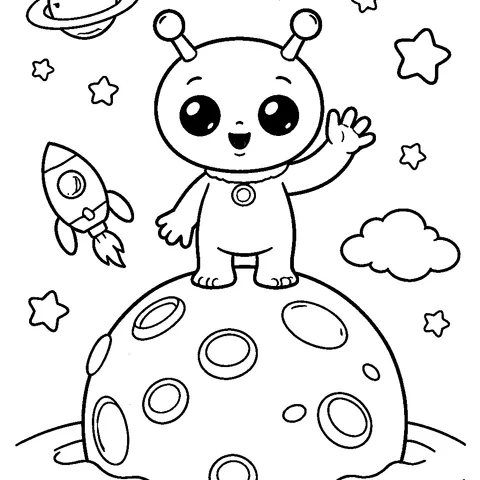
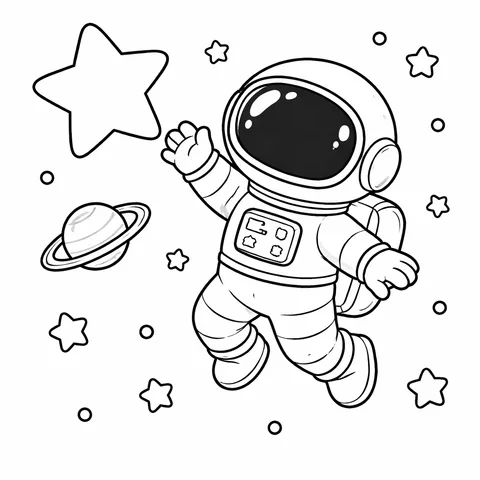
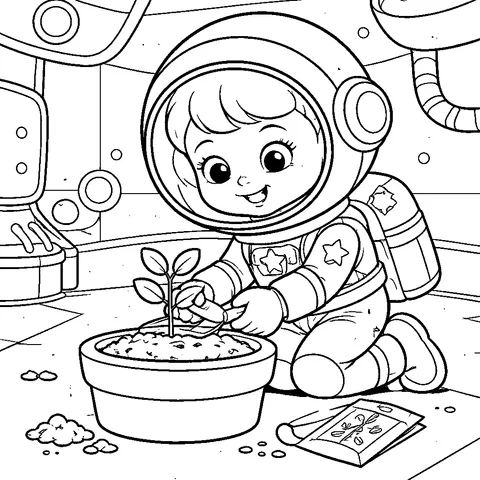
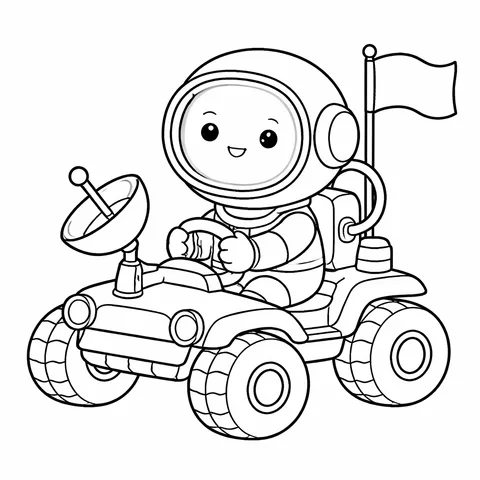
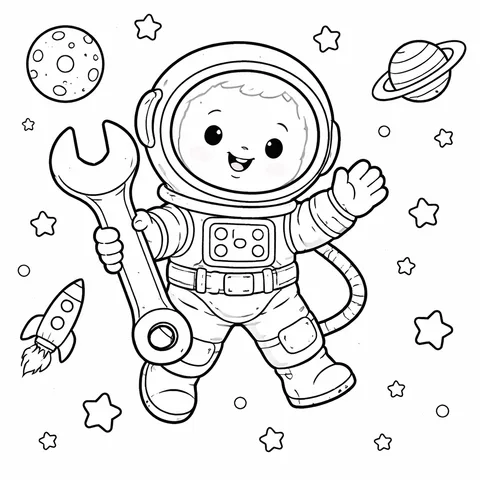
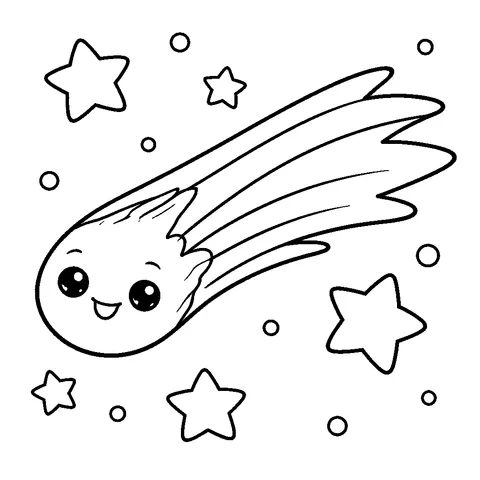
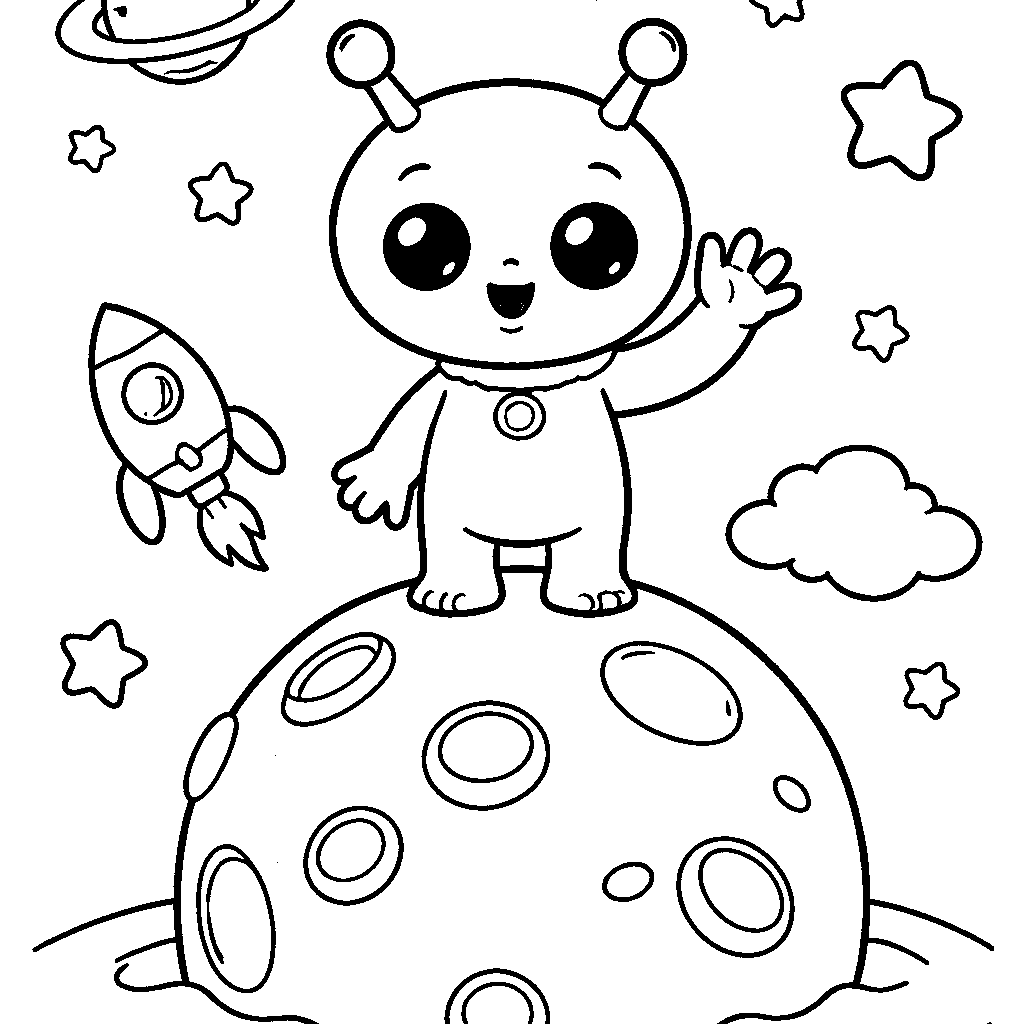
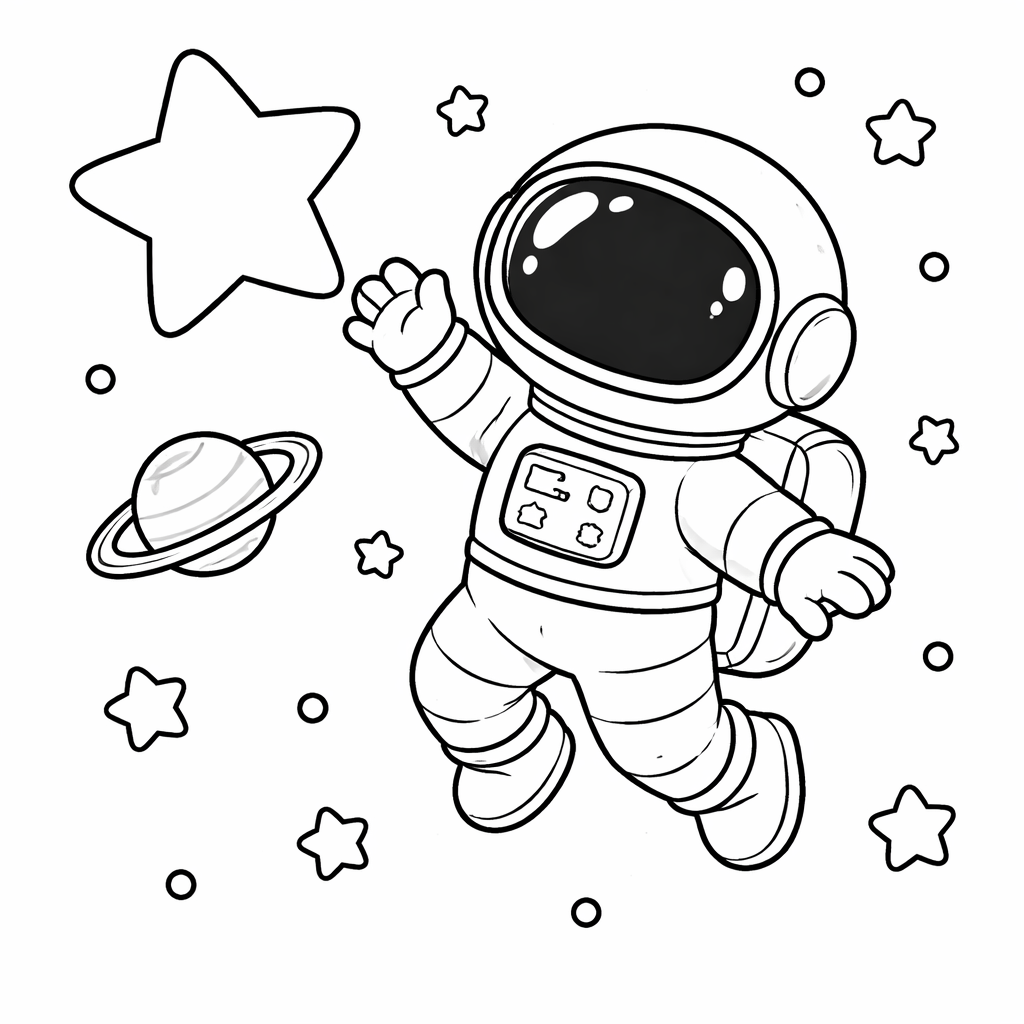
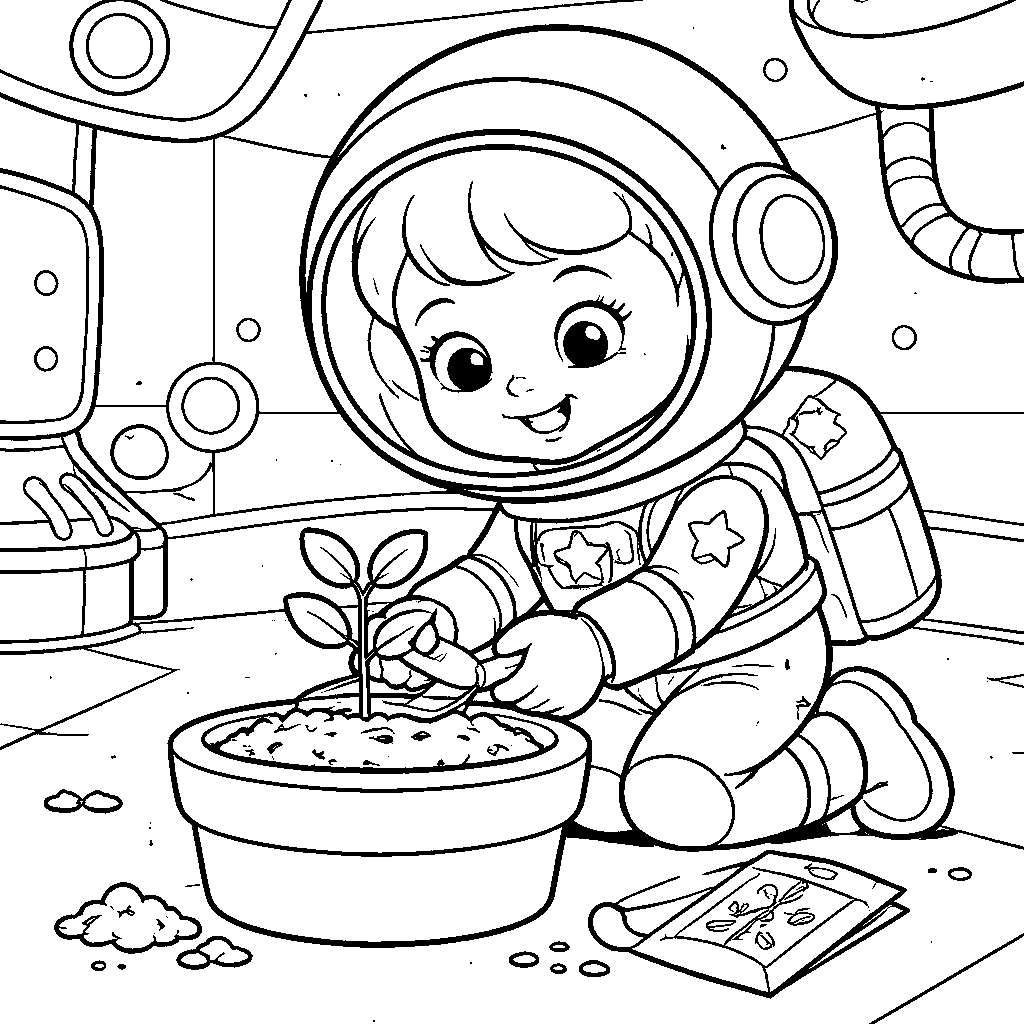
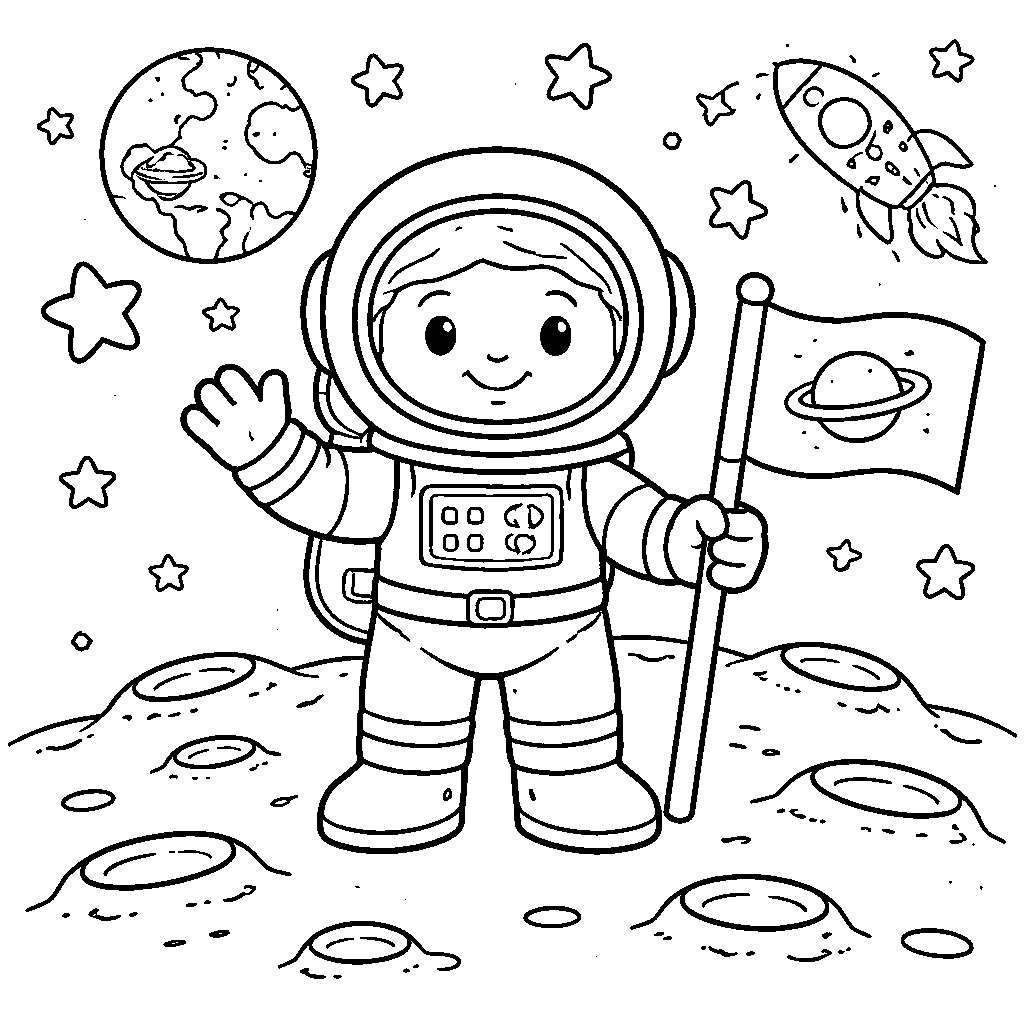
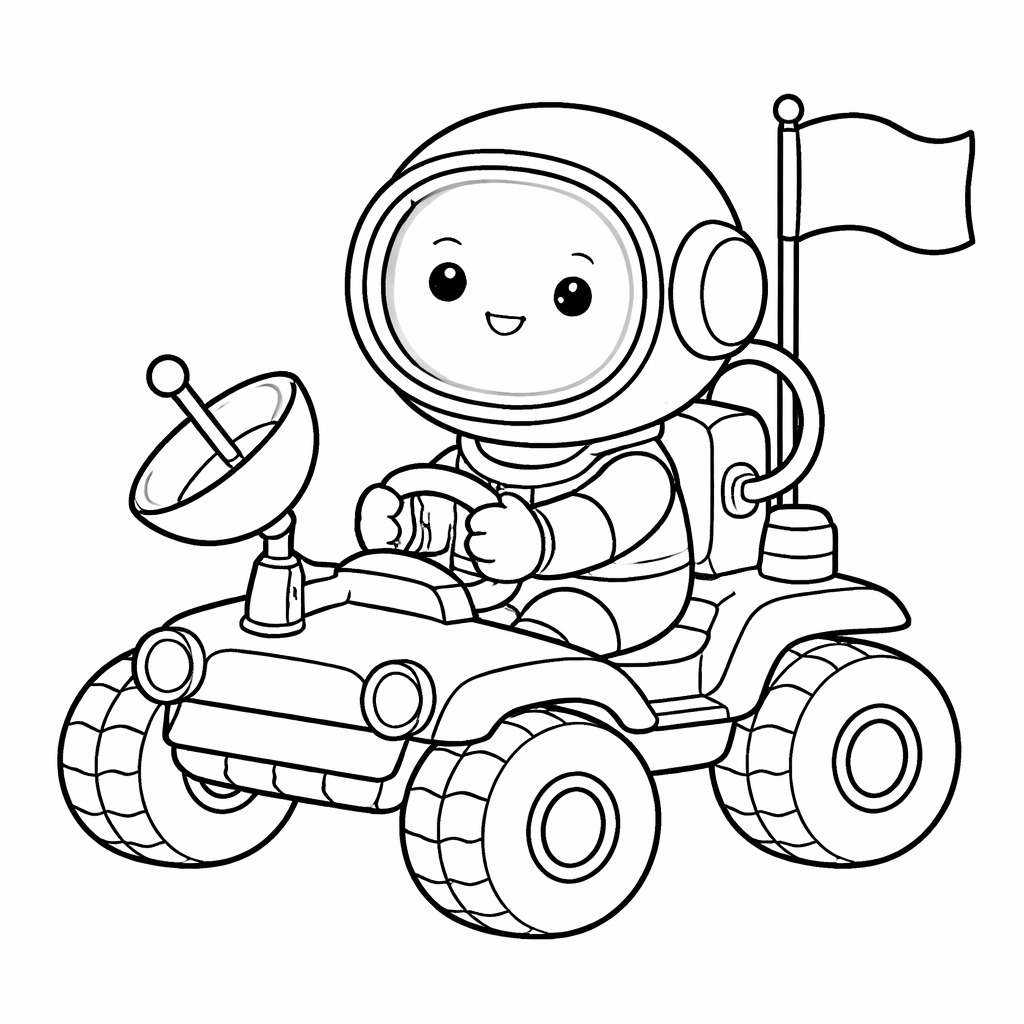
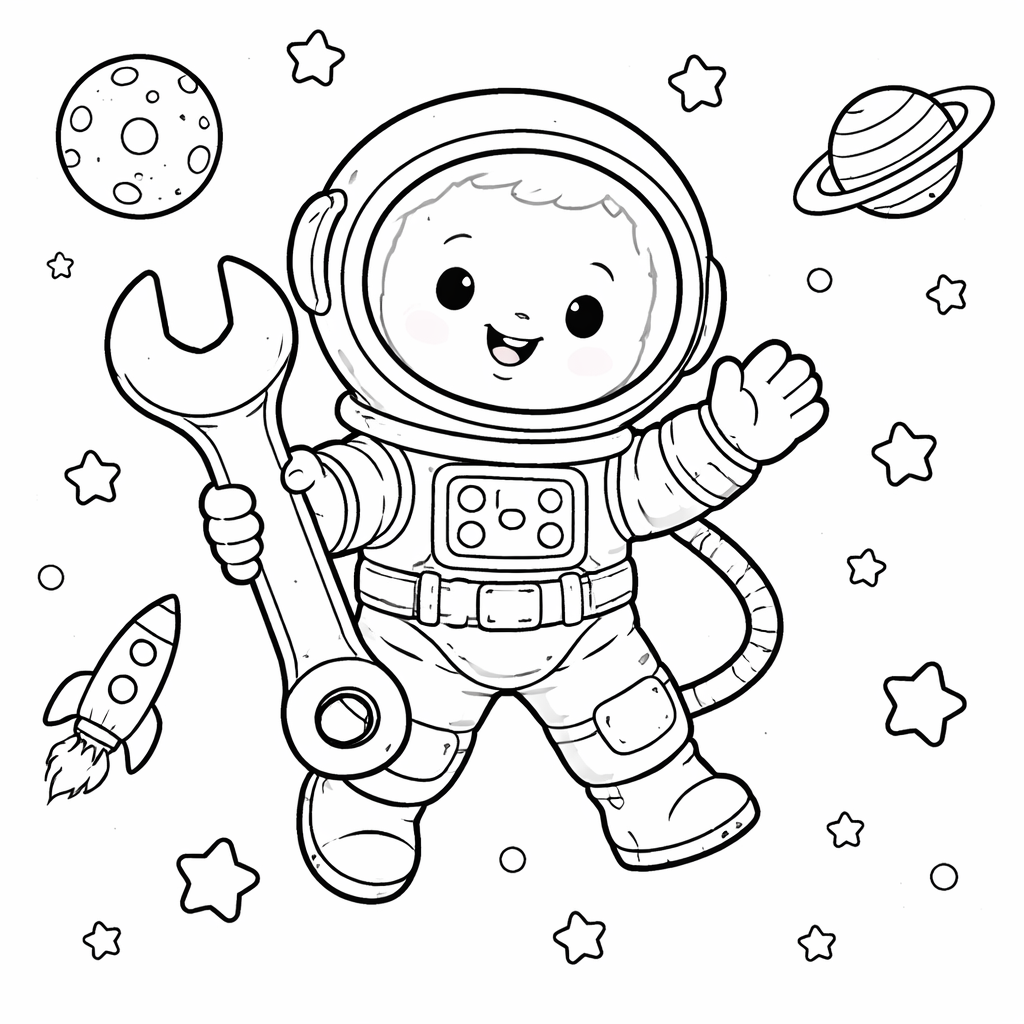
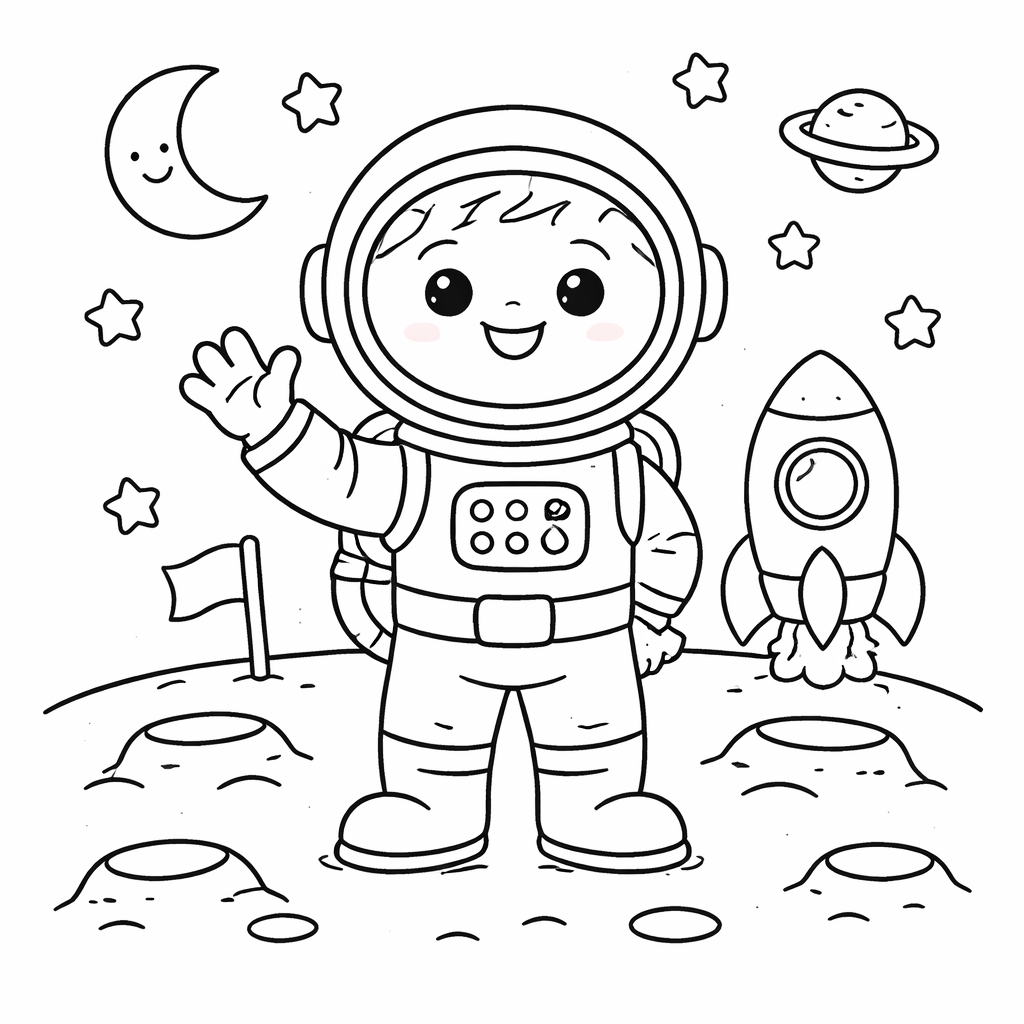
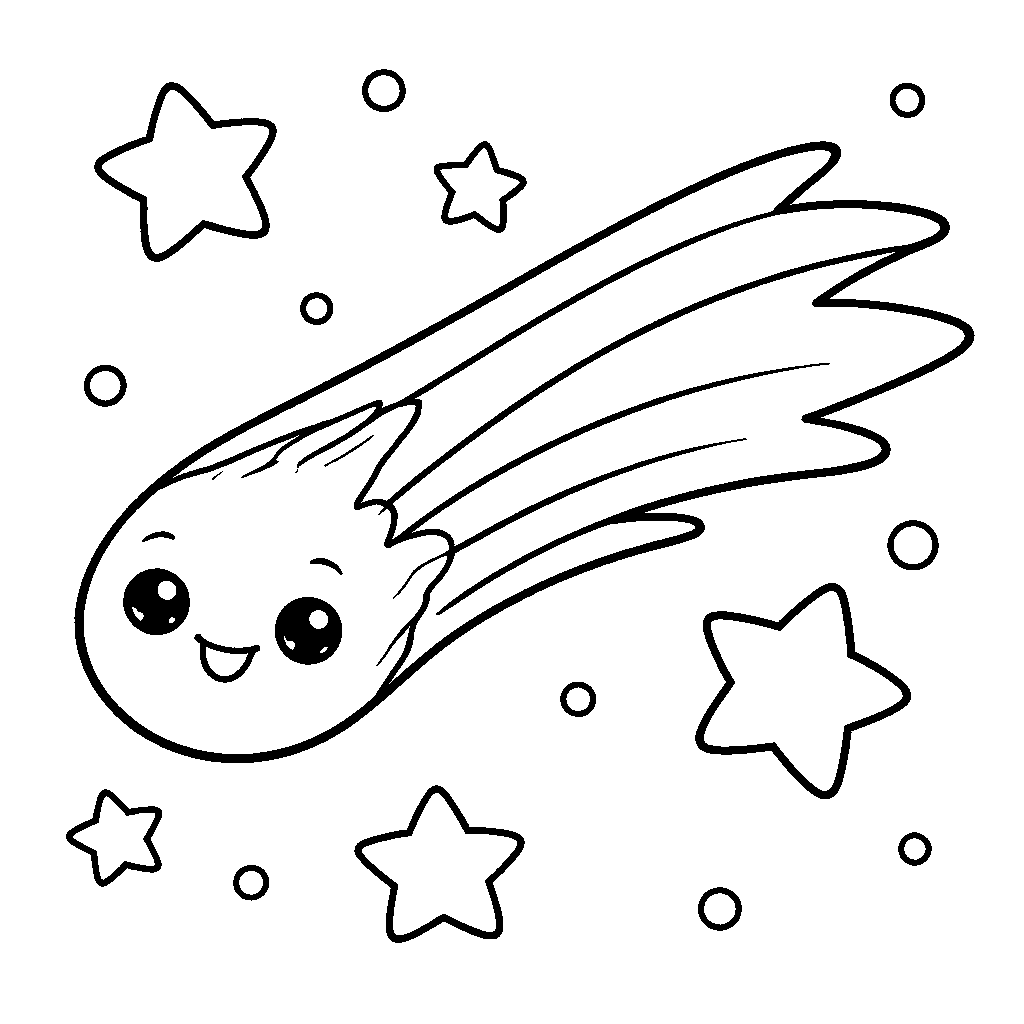
This hub gathers 16 printable space coloring pages for children who like astronauts, rockets and planets. The set is mostly built around people in space. There is an astronaut standing on the moon, one seated on a lunar rover in Astronaut On Moon Rover Coloring Page, one reaching for a star in Astronaut Floating With Star Coloring Page, one on a spacewalk holding a large wrench in Astronaut Spacewalk Tool Coloring Page, and one planting a seedling in a pot in Astronaut Growing Plant Coloring Page. Other pages widen the view: Cute Earth Coloring Page, Friendly Comet Coloring Page, Big Smiley Moon Coloring Page and Alien Waving Coloring Page, where a small alien waves from a small planet. Cute Rocket Coloring Page is marked for ages three to six, Big Smiley Moon Coloring Page for ages two to four, and the rest for ages four to seven. All are black and white outlines with large simple areas.
How to use the space pages
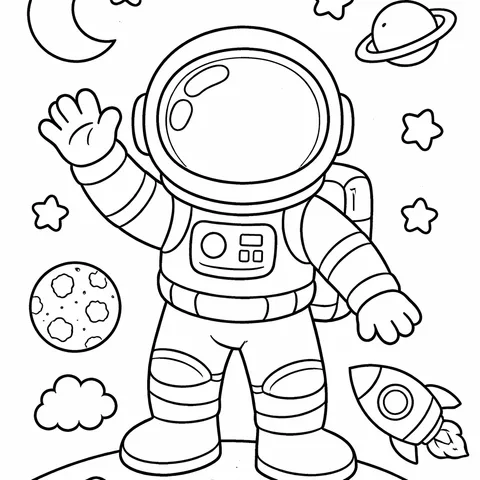
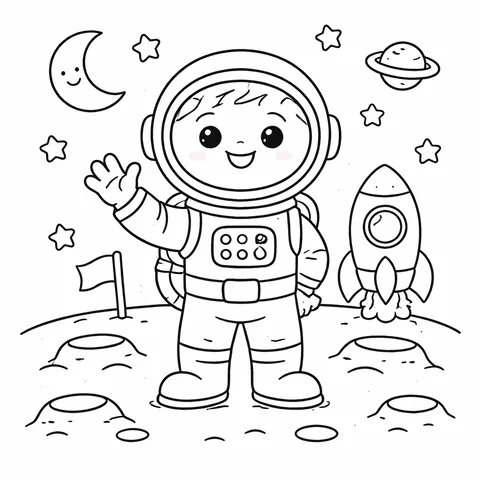
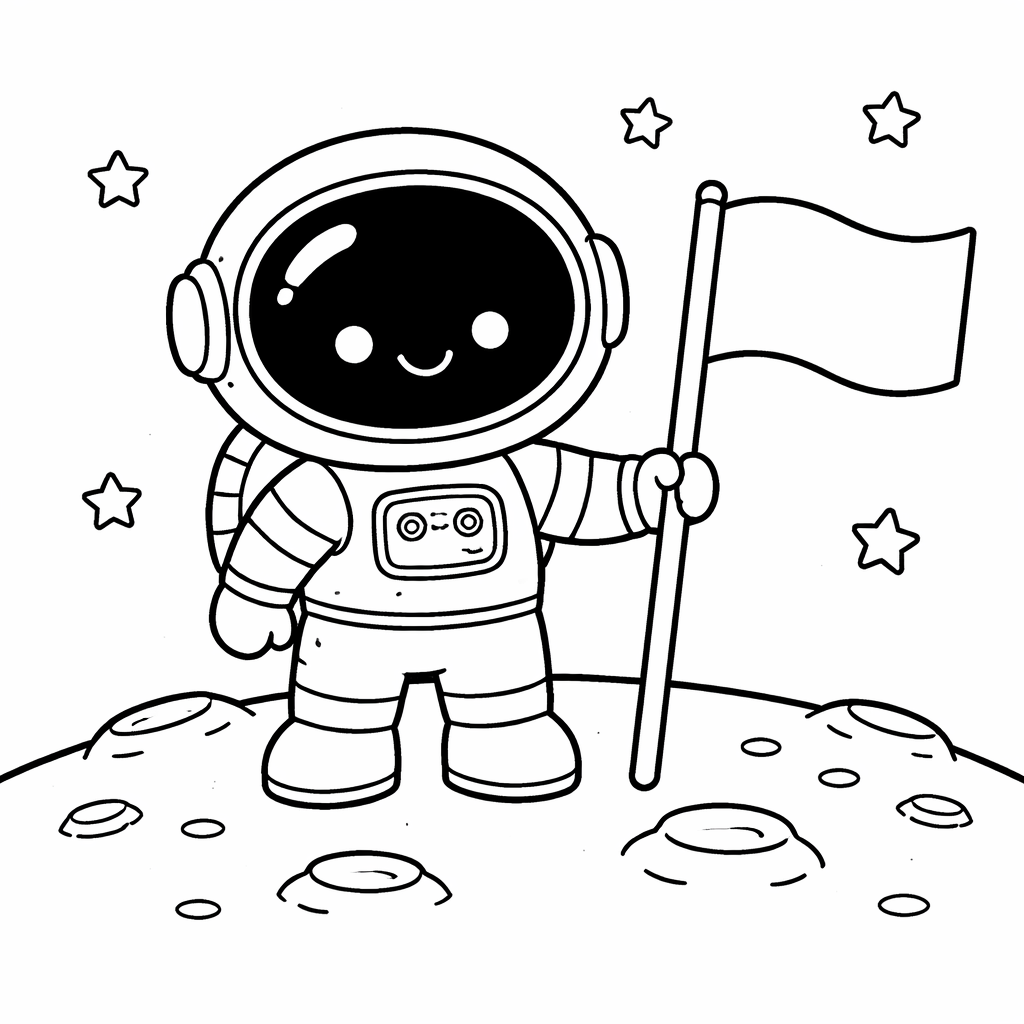
Space pictures give a child a lot to talk about, which is useful, because talking is often the easier half of the activity. Print a page and let the child look at it for a while before you say anything about it. On Astronaut on the Moon Coloring Page the astronaut is small and the surface around them is empty, so there is white ground to draw on later. Then ask what the child thinks the person is doing, and let the answer be invented rather than corrected. Colouring something they have described keeps them attached to the page. Keep the paper flat on the table, so the picture stays the centre of the session.
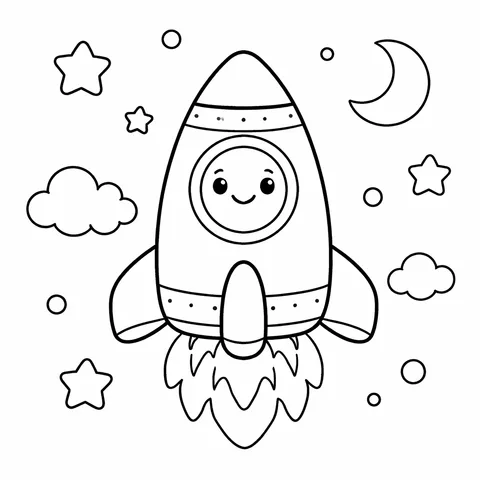
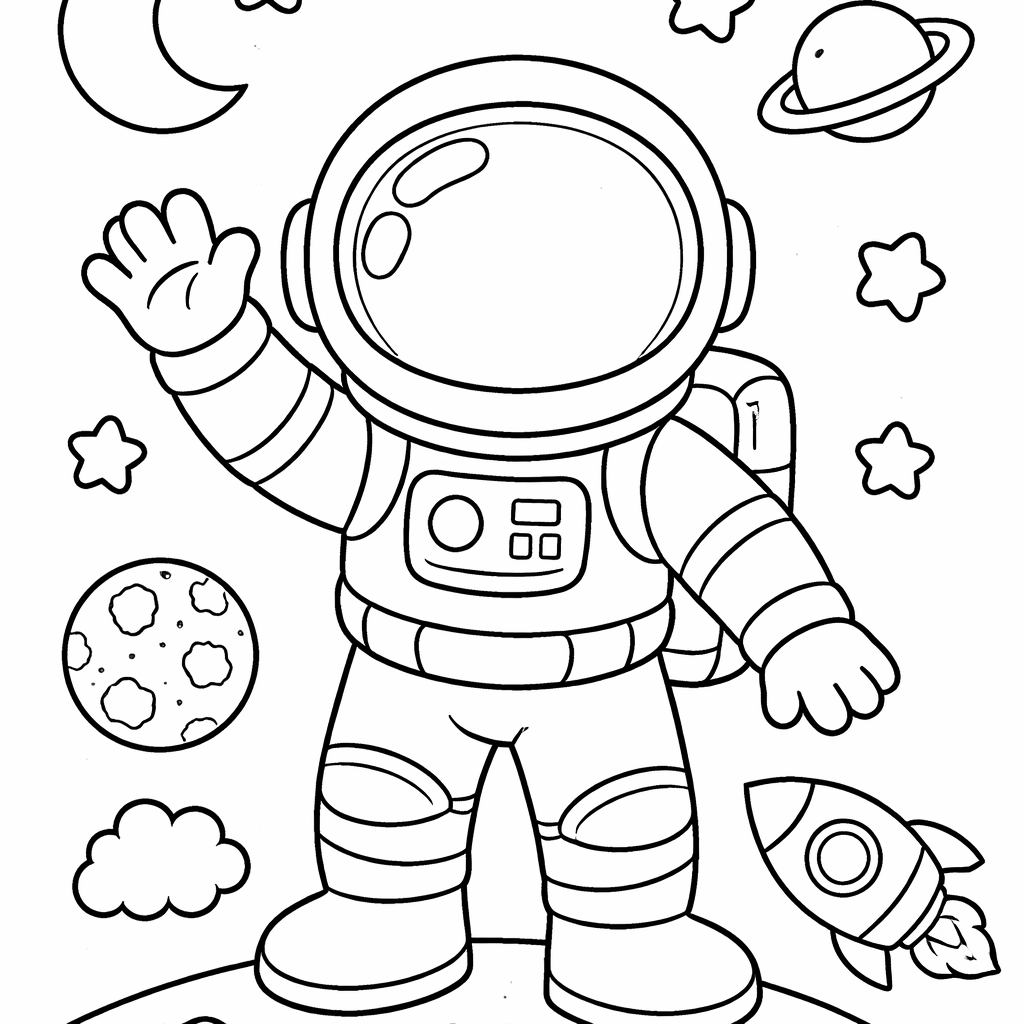
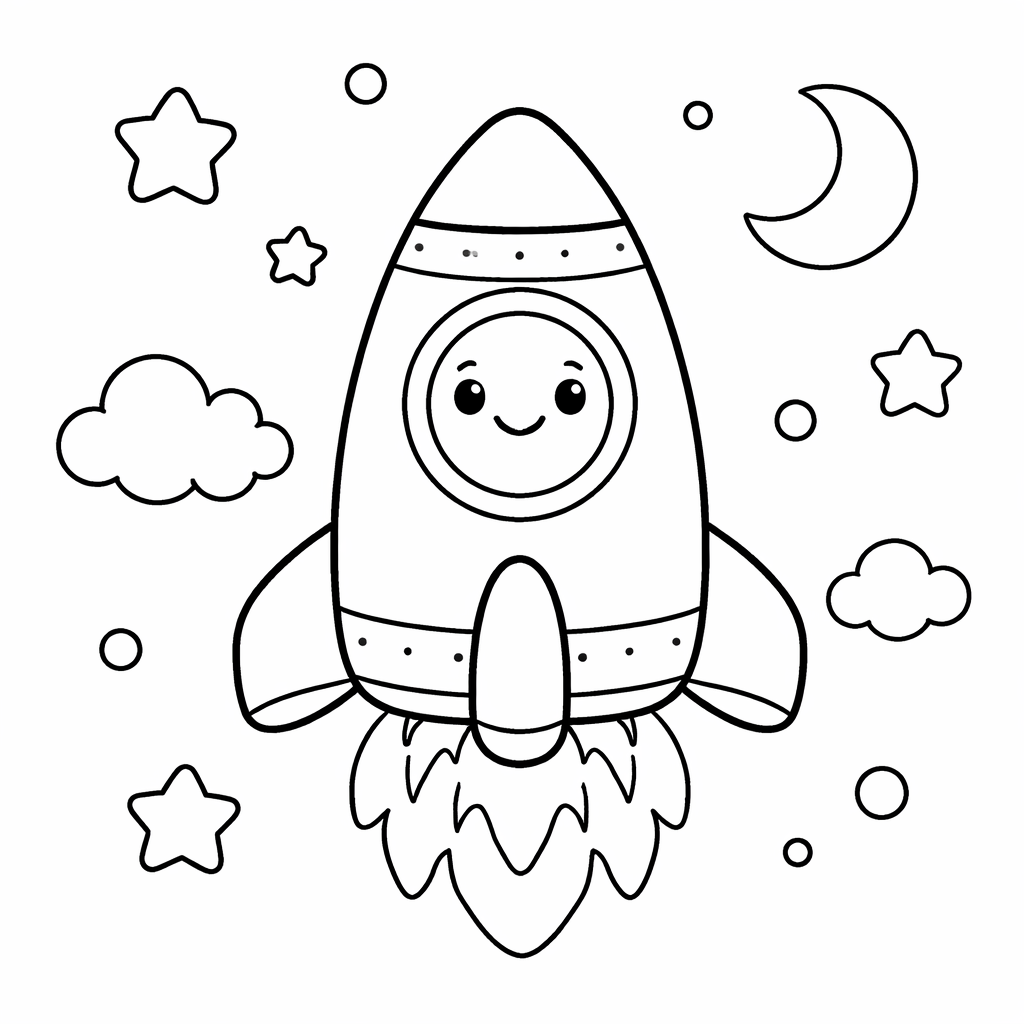
The rocket pages are the usual starting point because the shape is familiar. Cute Rocket Coloring Page is marked for ages three to six, and Friendly Astronaut Coloring Page gives a single figure with no scenery at all, which makes it the least demanding page in the set to finish. A child who finds the subject hard can colour the largest enclosed area first, usually the helmet or the body of the rocket, and then come back for the smaller parts. An older child who wants a longer session can take the small areas first and leave the large shapes for last, which keeps the page from looking half finished if attention runs out.
What the space drawings cover
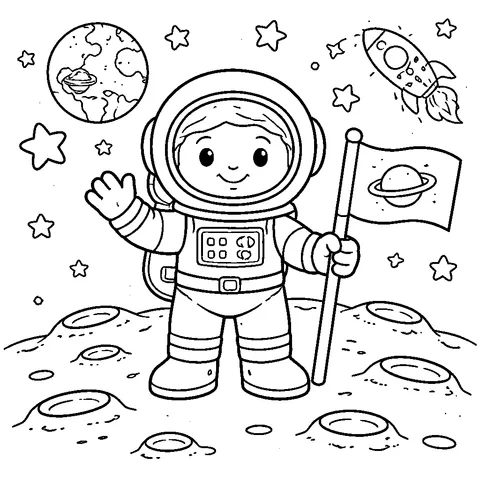
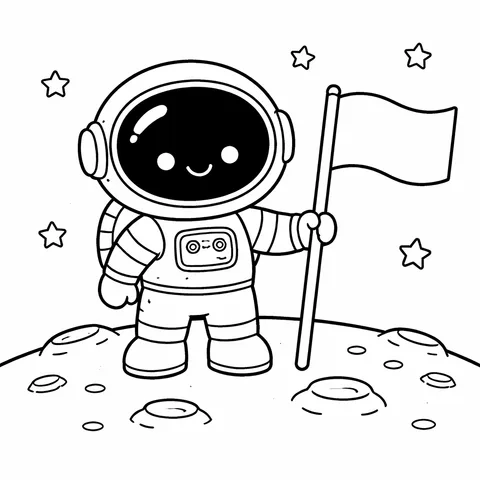
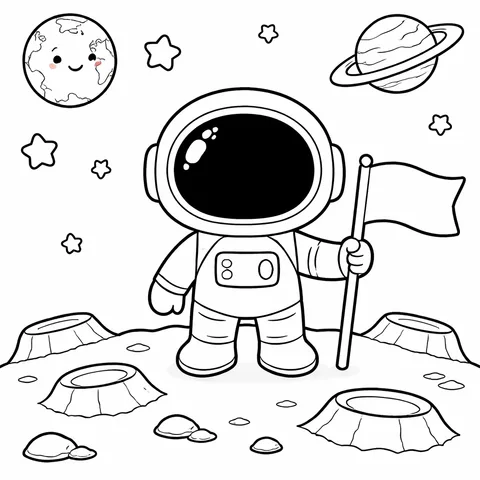
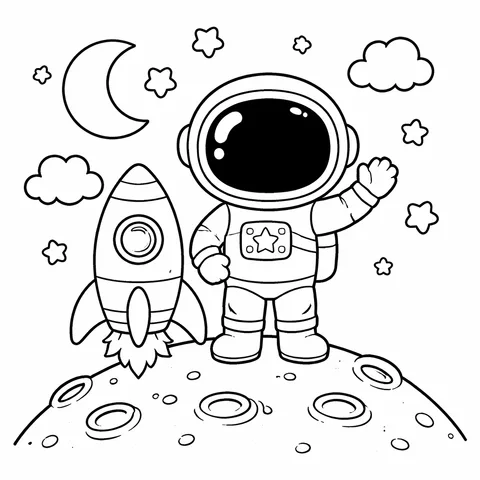
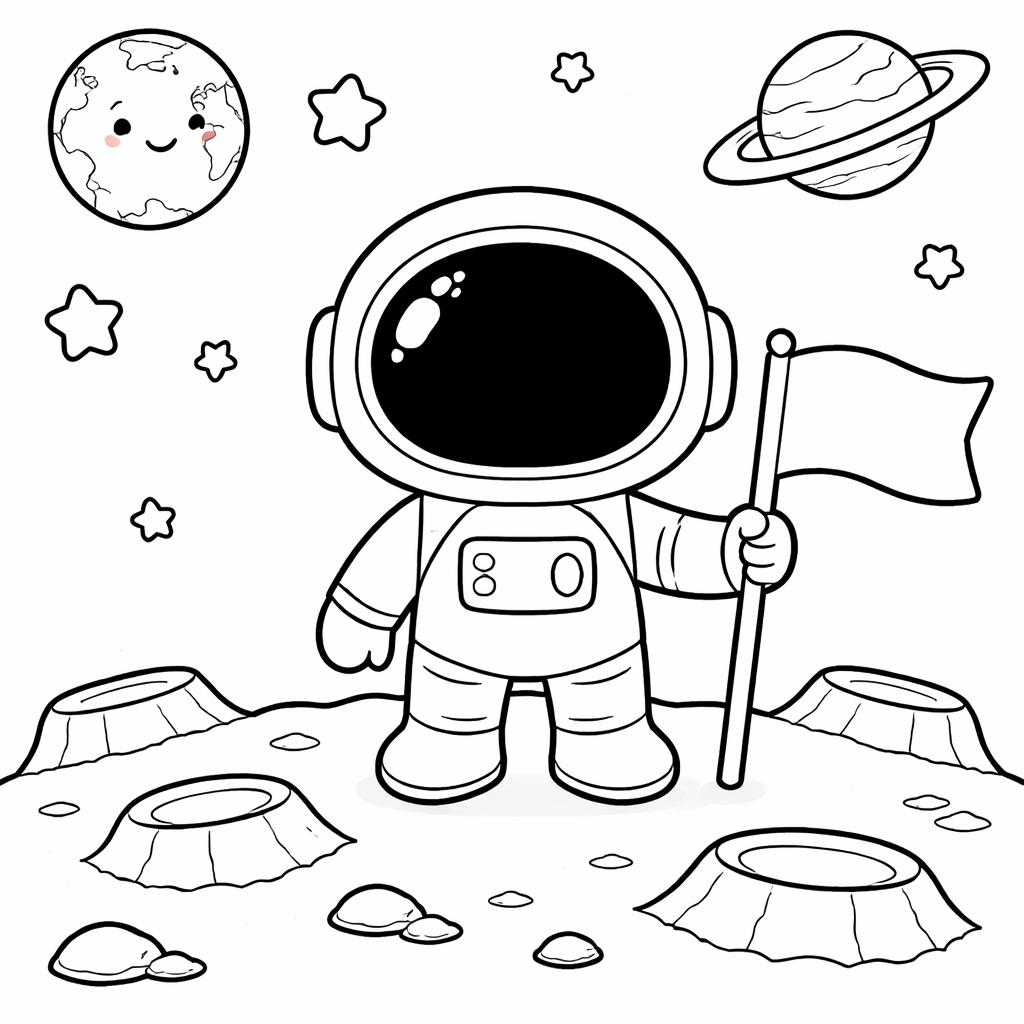
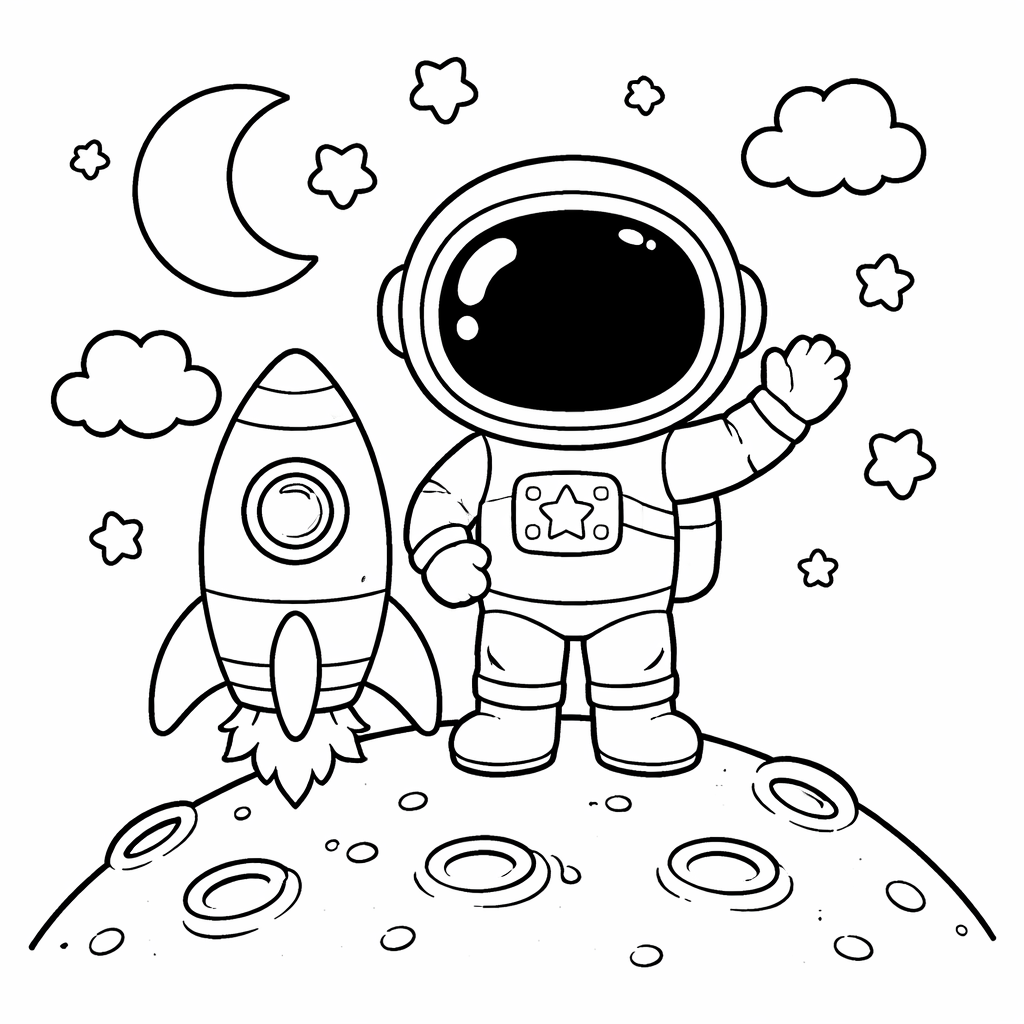
The drawings cover a spread of space ideas without any labels or printed text on the page. There are astronauts on the ground of another world and astronauts in transit: Astronaut on Moon Coloring Page, Astronaut With Flag Coloring Page and Astronaut With Moon Coloring Page sit close together, while Astronaut with Rocket Coloring Page pairs a figure with a rocket. Friendly Comet Coloring Page shows a comet passing stars, and Friendly Beakers Coloring Page shows science beakers with bubbles and no labels, which reads as a laboratory rather than outer space but suits a curious child who likes experiments. The pages that place an astronaut on the moon give a different kind of picture, with a curved surface and nothing floating in the air.
Some pages lend themselves to talking or to counting without being designed for either. Astronaut Floating With Star Coloring Page has one large five-point star, which pairs neatly with the counting sheets elsewhere in the site. Alien Waving Coloring Page puts a small alien on a small planet, so a child can describe what the alien is doing there. The comet page also gives a good excuse to ask what the child thinks a comet is made of, and to write the answer down beside the picture. There is no text anywhere on these pages, so nothing has to be read for the picture to work.
Age differences across the set
The age labels vary more in this hub than in the others. Big Smiley Moon Coloring Page is marked for ages two to four and is the gentlest page here, a simple smiling moon with no scenery, which is also the easiest page to finish in one go. Cute Rocket Coloring Page is marked for ages three to six. The rest, including Alien Waving Coloring Page, Cute Earth Coloring Page, Friendly Comet Coloring Page, Friendly Beakers Coloring Page, Friendly Astronaut Coloring Page and the astronaut and moon pages, are marked for ages four to seven and carry more detail to work through.
Extending the activity afterwards
When a page is finished, the space theme keeps going without new printables. Ask the child what they would pack for a trip, and let them draw or write the list next to the picture. Astronaut Growing Plant Coloring Page already shows a seedling in a pot, so it is a natural page for a question about what a plant needs in order to grow. Astronaut Spacewalk Tool Coloring Page shows a single large wrench, which invites a game of naming tools. Cute Earth Coloring Page works well as a talking point about who lives on the planet and what they are doing there.
Printable pages for this activity
Every page below prints on its own. Use the age label to pick a good first match for your child, then add a second page from the same activity if they want to keep going.






Questions teachers ask
- Which space coloring page suits a two-year-old?
- Big Smiley Moon Coloring Page is the one marked for ages two to four. It shows a simple smiling moon with no other scenery, so there is little to fill in and a young child can finish it quickly. Every other page here is marked for ages three or older.
- How many space coloring pages are there?
- There are 16 pages. Most of them show astronauts, walking on the moon, riding a lunar rover, floating with a star, waving, holding a flag, planting a seedling and carrying a wrench on a spacewalk. The rest cover a rocket, Earth, a comet, the moon, an alien and beakers.
- Can I print the space coloring pages at home?
- Yes. They are black and white line drawings with thick outlines on a plain white background, which print clearly on a standard home printer. Print at full size, and allow extra time on the astronaut pages, since they carry a good deal of detail.
- What do the space coloring pages work on?
- They give a child a subject to imagine and describe, which supports talking and storytelling as much as colouring. Several pages also show familiar objects in an unusual setting, such as a wrench or a seedling, so a child can connect what they already know to the picture.